













An 18th-century wooden statue of Jesus harbored a surprise —time capsule letters hidden in the buttocks, researchers reported.
The work of art, called "Cristo del Miserere," is a wooden statue that adorned the Church of Santa Águeda in Sotillo de la Ribera, Spain. It was damaged a few years ago and conservators at the Madrid-based Da Vinci Restauro were fixing the Jesus statue, which had been cracked open in the buttocks area, said Gemma Ramirez, one of the restorers who made the discovery. Such wooden statues were typically made hollow, both because they were lighter that way, and because they contracted less, leading to less cracking, Ramirez said. [Religious Mysteries: 8 Alleged Relics of Jesus]
As Ramirez and another art restorer were moving the cracked-open statue, the colleague noticed a surprise hiding inside.
She shouted, "There's something inside!" Ramirez recalled.
Her colleague was stunned speechless, and so Ramirez initially thought her colleague was referring to insects that often feed on decaying wood, she told Live Science. But the duo carefully put blocks under the statue — which is about as big as a man — to support its weight, and peered inside.
They saw two tiny, handwritten scrolls. They carefully took pictures before extracting them, she said.
It turned out the scrolls, which were written on sheepskin with a purple-brown ink, were penned by a man named Joaquin Minguez, who was the prior of the church in 1777. The statue itself was made by a man named Manuel Bal, according to the letters.
Get the world’s most fascinating discoveries delivered straight to your inbox.
The letters describe life at the time, from the earthquakes experienced to the resources that supported people, including wheat fields, vineyards, and deer and wolves people hunted, Ramirez said. The prior also describes people falling ill with fevers that typically last three or four days. The monks spent their time playing cards and ball games, the letter continued.
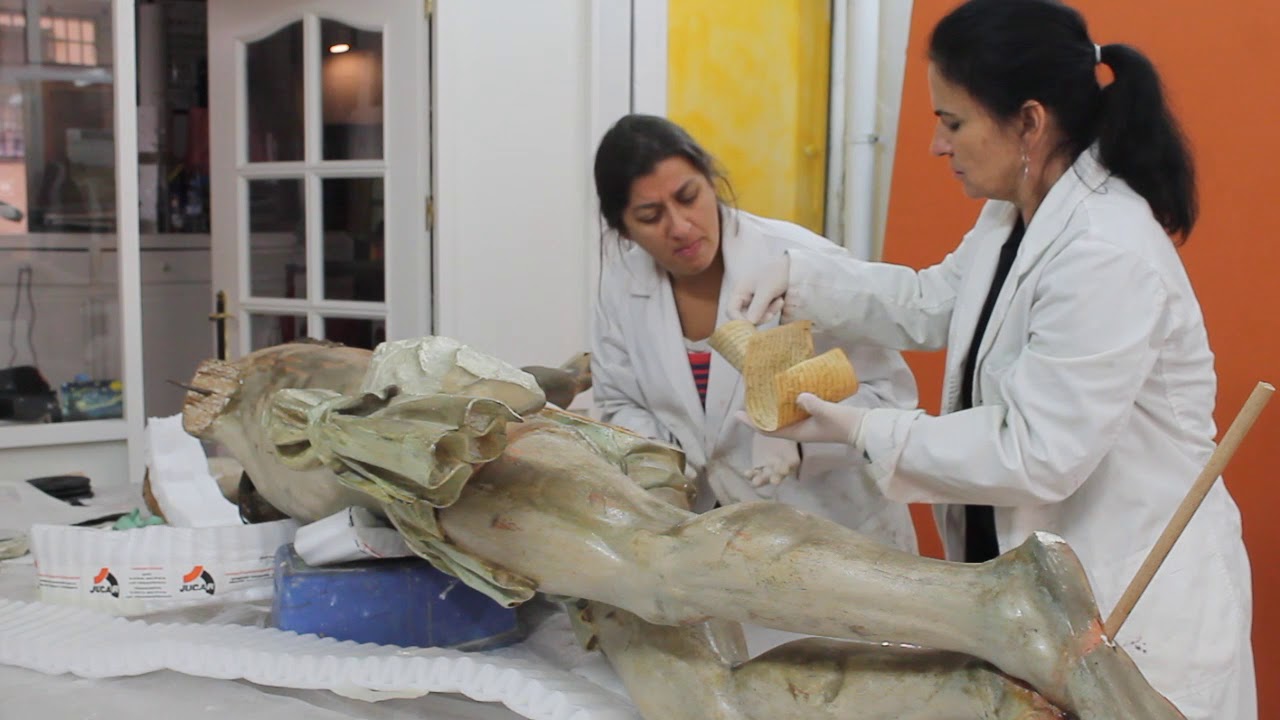
The portrait of daily life in the 1700s was clearly meant to be a kind of time capsule that was eventually found, because the handwriting is exquisite, Ramirez said.
"He wanted to leave a memory of their experience in their epoch," Ramirez told Live Science in an email.
After examining the letter, the team created a pH-neutral re-creation of the letter, which means it was neither acidic or basic and so wouldn't damage the sculpture. They then reinserted it, along with their own letter describing modern times, Ramirez said.
"Maybe future generations will find it," Ramirez said.
Originally published on Live Science.

Tia is the editor-in-chief (premium) and was formerly managing editor and senior writer for Live Science. Her work has appeared in Scientific American, Wired.com, Science News and other outlets. She holds a master's degree in bioengineering from the University of Washington, a graduate certificate in science writing from UC Santa Cruz and a bachelor's degree in mechanical engineering from the University of Texas at Austin. Tia was part of a team at the Milwaukee Journal Sentinel that published the Empty Cradles series on preterm births, which won multiple awards, including the 2012 Casey Medal for Meritorious Journalism.