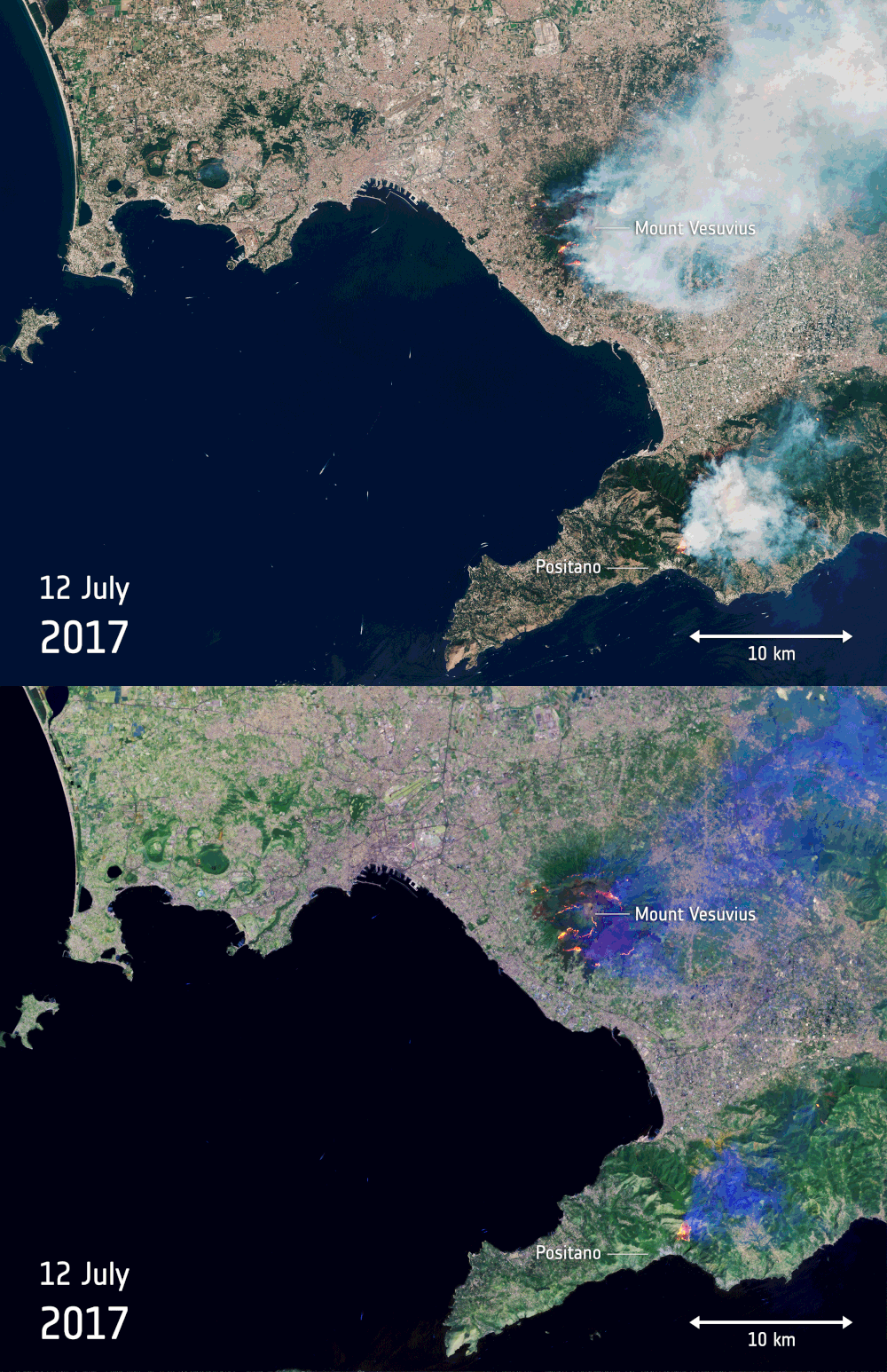
Much of the woodlands in Vesuvia National Park, which contains the Mount Vesuvius volcano, have been destroyed by wildfires, shown here in this satellite image on July 12, 2017.
(Image credit: ESA)
A thick plume of smoke is rising from Italy's Mount Vesuvius, but don't panic. Pompeii isn't about to happen all over again.
The smoke, visible in a new set of satellite images released by the European Space Agency (ESA), is coming from a series of wildfires on the mountain. According to the ESA, much of the woodlands in Vesuvia National Park, which contains the volcano and its surroundings, have been destroyed.
The fires have forced evacuations near Naples, while tourists on Sicily had to flee separate fires by boat, according to The Independent newspaper. Drought and high temperatures have driven the wildfires, but some officials suspect that some of the blazes on Mount Vesuvius were started by people, The Independent reported. [See Photos of Pompei: A City of Ash]
Smoke obscures Vesuvius in new satellite images taken by the Copernicus Sentinel-2B satellite on July 12, and thermal images show a number of blazes dotting the active volcano.
Vesuvius is most famous for its eruption in A.D. 79 that destroyed the Roman cities of Pompeii and Herculaneum. Pyroclastic flows of mud and ash buried the towns, preserving skeletons and in some cases leaving body-shaped voids that recorded exactly where victims of the eruption died. Vesuvius killed about 100 people in another eruption in 1906 and destroyed several villages when it again erupted in March 1944.
The current Italian wildfires have killed two people, according to Fox News. In all of southern Italy, including Sicily, at least 64,000 acres (26,000 hectacres) of woodland have been burned.
Stephanie Pappas is a contributing writer for Live Science, covering topics ranging from geoscience to archaeology to the human brain and behavior. She was previously a senior writer for Live Science but is now a freelancer based in Denver, Colorado, and regularly contributes to Scientific American and The Monitor, the monthly magazine of the American Psychological Association. Stephanie received a bachelor's degree in psychology from the University of South Carolina and a graduate certificate in science communication from the University of California, Santa Cruz.