













Photos: Lost Roman Mosaics of Southern France

Excavation site

Archaeologists have undertaken a large-scale excavation in Uzès, a city in southern France. They found mosaic floors dating back to Roman times, when the city was called Ucetia. [Read the full story here]
The dig is taking place ahead of the construction of a school's boarding facility. Before the students can move in, archaeologists need to make sense of this site's ancient (and medieval) inhabitants.
Public art
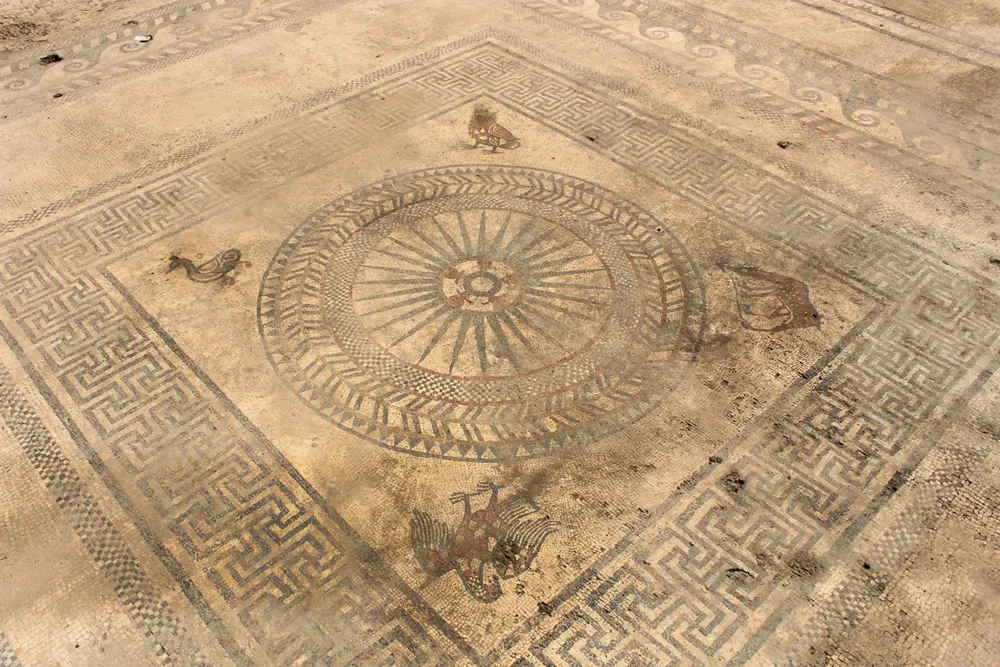
One of the most impressive finds was a mosaic floor, dating back second half of the first century B.C., discovered in the ruins of what's thought to be a Roman public building.
Wavy edges

This detail shows a wave-patterned border from the well-preserved mosaic.
Fauna

Besides the geometric patterns, this particular design included an animal in each corner. Shown here is the fawn. The other corners feature an eagle, an owl and a duck.
Cleaning the mosaics

This view shows the whole room, which had a complex series of mosaics. Two biggest mosaics have geometric motifs that frame central medallions
Aerial view

Archaeologists think this building stood until the A.D. 1st century.
Dolphins in the domus

The excavators also found a house of a wealthy Roman at the site, from the A.D. 1st century. One room in this building contained a pavement with some geometrically arranged mosaic tiles, and and dolphin motifs.
Get the world’s most fascinating discoveries delivered straight to your inbox.
Central heat

The house had something like a central heating system. This so-called hypocaust was uncovered in one corner of the building. This is where the hot air would have circulated under the house.
