













Surprising Echo of Ancient Irish Horns in Indian Instruments
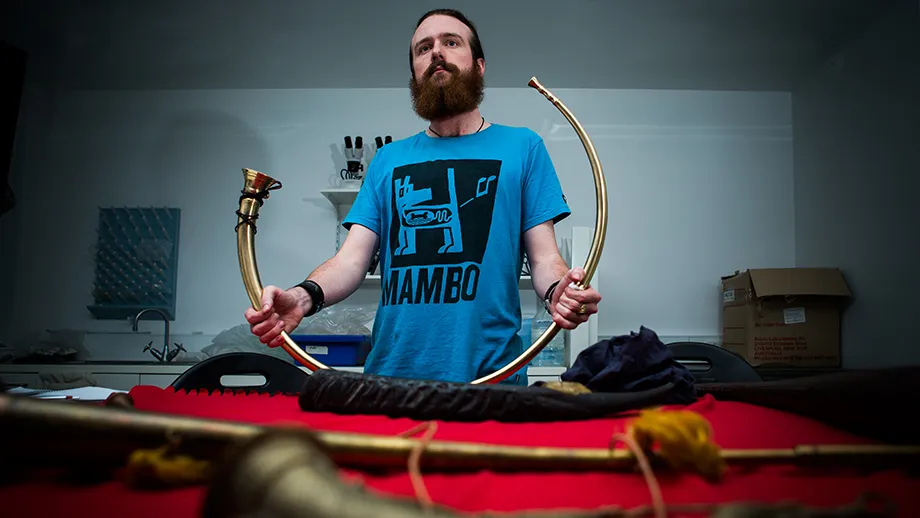
It was a musical link to the past hidden in plain sight: Some modern horns played in India and neighboring regions bear a striking resemblance to ancient Irish instruments that date back to Europe's Bronze and Iron Ages, according to a new study.
The comparisons suggest sustained cultural exchange between the two regions, and could help researchers to understand the origins of some Indian instruments and to reconstruct the sounds of ancient Irish music.
"Some horns are frankly shockingly similar, to the point where it is like witnessing time travel," study author Billy Ó Foghlú told Live Science in an email. Ó Foghlú is an archaeologist and Ph.D. student at the Australian National University in Canberra. "If I were to find one of these modern Indian instruments in an Irish archaeological excavation and I didn't know what I was looking at, I would likely assume it was a Late Bronze Age Irish artifact." [4 Unusual Ways Music Can Tune Up the Brain]
In a new study published in April in the Journal of Indian Ocean Archaeology, Ó Foghlú compared ancient horns from around Europe with modern South Indian counterparts. He focused on the version of what is called a kompu from Kerala, India: a large, C-shaped horn cast in bronze with a high tin content. It is similar to Late Bronze Age horns from Ireland and Scandinavia in form, materials and, likely, production process, Ó Foghlú said.
He also noted that other types of horns found in India are "almost identical" to instruments from other parts of Irish history.
Ó Foghlú said he was inspired to investigate this musical connection after he saw an image from the exterior of a Buddhist monument. The carving depicts two musicians playing the carnyx, a distinctive bronze Irish horn in the form of an animal head. Known as the Great Stupa, the monument is located at Sanchi in central India and is more than 2,000 years old.
But the similarities between the instruments aren't just physical, Ó Foghlú said. Modern Keralan kompu horns in India are part of an ensemble, in which they are used percussively and rhythmically, perhaps more musically akin to a drum than a trumpet. The tuning of these instruments, which can sound out of tune with each other to the unpracticed ear, may also provide clues about how the ancient European horns were played, says Ó Foghlú.
Get the world’s most fascinating discoveries delivered straight to your inbox.
"It is the musicological similarities of these instruments that are really wonderful," Ó Foghlú said.
Original article on Live Science.