













New Technique Helps Find Hidden Consciousness in Coma Patients

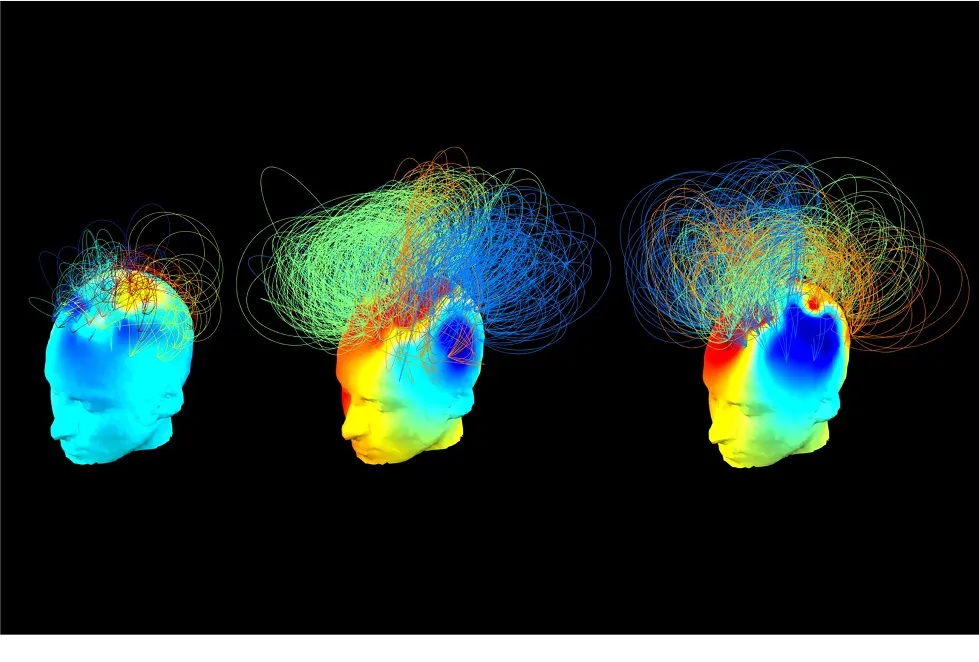
Some patients who are in a coma may be aware of their surroundings even though they can't visibly communicate with others, and now, scientists have found a new way to help identify these patients.
Consciousness is one of the most mysterious phenomena. Scientists still don't know exactly how the brain activity gives rise to consciousness, but they have been able to find some differences between a conscious brain and an unconscious one. Such insight could help researchers design tests for the minority of comatose patients who may be "aware" but who are unable to show it.
In a new attempt to tackle this issue, researchers looked at 32 comatose patients and 26 healthy people. Some of the comatose patients were diagnosed as "minimally conscious," meaning there was some evidence that they may have retained some awareness of their surroundings (for example, the patient could follow simple commands, such as squeezing a finger). But others were diagnosed as "vegetative," which means they were thought to have lost all conscious awareness, even though they could breathe on their own or open their eyes.
The researchers examined participants' brain waves using electroencephalography (EEG) and applied mathematical tools to the EEG data to find patterns of communication across brain regions. The researchers then compared these patterns in the comatose patients' brains with those of healthy people.
As expected, the brain-activity patterns in the comatose patients' brains differed from those of the healthy participants. Healthy, conscious brains showed "rich and diversely connected networks," which were lacking in the comatose patients' brains, the researchers said. [Top 10 Mysteries of the Mind]
However, some comatose patients who were thought to be completely vegetative actually showed some patterns similar to those of healthy people. These were the patients who, despite being diagnosed as vegetative, had been suggested to have some level of awareness in previous brain imaging experiments. For example, although the patients did not perform any physical movements in response to commands, brain imaging showed that when they were told to imagine doing a physical activity, such as playing tennis, the area of the brain responsible for controlling movement, lit up.
"Some vegetative patients who show signs of hidden awareness have remarkably well-preserved networks similar to healthy adults," the researchers wrote.
Get the world’s most fascinating discoveries delivered straight to your inbox.
Moreover, the researchers found that the brain activity of minimally conscious patients was linked with how responsive they were: The patients who were more responsive had brain activity that was more similar to that of healthy people, according to the study, which was published today (Oct. 16) in the journal PLOS Computational Biology.
The new findings could help doctors identify "vegetative" patients who actually have some awareness, as well as improve their clinical assessment, the researchers said.
"Being able to detect the recovery of brain networks in patients, alongside or even before they show behavioral signs of improvement, is very promising," the researchers said in a statement.
However, the researchers noted that more work is needed before their new findings can be applied to the patients and be used as a reliable tool for guiding their clinical care.
Email Bahar Gholipour. Follow Live Science @livescience, Facebook & Google+. Originally published on Live Science.
