













Middleton's 2nd Pregnancy: Is Short Spacing Healthy?

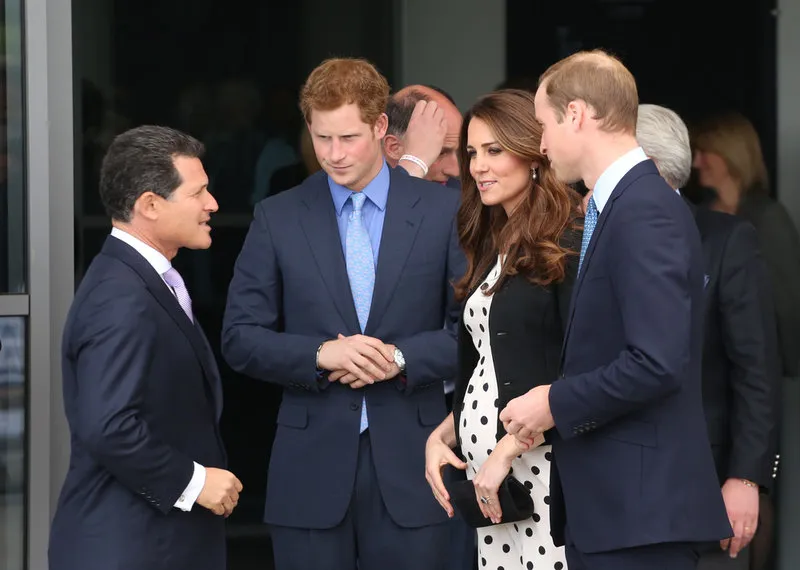
The Duchess of Cambridge, the former Kate Middleton, is pregnant again, about 13 months after giving birth to her first child, but is such a short time between pregnancies healthy?
Kate gave birth to her first child, George, on July 22, 2013, and her husband, Prince William, announced yesterday (Sept. 8) the couple is expecting their second child, according to BBC News.
The March of Dimes, an organization that aims to prevent premature birth, recommends that women wait 18 months between giving birth and becoming pregnant again, to give the women's body time to recover. A pregnancy within 18 months of giving birth has been linked with an increased risk of premature birth and lower birth weights, according to the Mayo Clinic.
Pregnancy and breast-feeding can diminish the body's supply of iron and folate, nutrients important for the mother and baby, the Mayo Clinic says. Becoming pregnant before these stores are replaced could affect the mother's or the baby's health, Mayo says. [Busted! 11 Big Fat Pregnancy Myths]
Doctors generally advise women to wait 18 months between giving birth and becoming pregnant again, to give the uterus time to recover, and to give couples time to incorporate the new addition into the family, said Dr. Jill Maura Rabin, co-chief, Division of Ambulatory Care, Women's Health Programs at the North Shore-LIJ Health System in New Hyde Park, New York. "It's probably better to wait 18 months," Rabin said.
However, if a women is in very good health, takes prenatal vitamins and has access to good prenatal care, as Middleton does, then a 13-month spacing "shouldn't really be an issue," Rabin said. "She should do fine."
Ultimately, how couples decide to space their children is an individual decision, Rabin said, and couples should speak with their doctor for advice.
Get the world’s most fascinating discoveries delivered straight to your inbox.
Follow Rachael Rettner @RachaelRettner. Follow Live Science @livescience, Facebook & Google+. Original article on Live Science.

Rachael is a Live Science contributor, and was a former channel editor and senior writer for Live Science between 2010 and 2022. She has a master's degree in journalism from New York University's Science, Health and Environmental Reporting Program. She also holds a B.S. in molecular biology and an M.S. in biology from the University of California, San Diego. Her work has appeared in Scienceline, The Washington Post and Scientific American.