













Kids with Pets More Likely to Avoid Meat
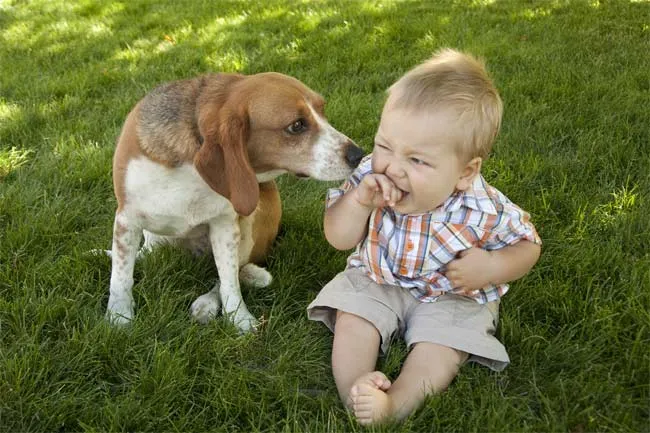
Kids who spend time cuddling up with Fido or Fluffy are more likely to turn their noses up at meat later in life, a new study suggests.
The reason? Those children who have formed attachments to their pets may develop empathy toward other animals, too, which can result in greater avoidance of eating meat, the researchers suggested.
"Once an individual feels empathy toward animals, it makes it harder to eat animals," study author Hank Rothgerber, a professor of psychology at Bellarmine University and a vegetarian for more than 12 years, told Live Science in an email.
"For these individuals [who get attached to their pets as kids], the love they feel toward their childhood pet(s) was likely so strong that they have a hard time not seeing some aspect of their companion animal in the meat that they wish to avoid," Rothgerber added. [7 Surprising Health Benefits of Dog Ownership]
In the study, Rothgerber and colleagues asked 273 people if they ate meat, and, if they did, how much meat they normally ate, as well as whether they owned a pet in childhood and how attached they were to their pets.
The researchers also measured the participants' degree of empathy toward animals by asking if they agreed with statements such as "Seeing animals in pain upsets me," or "People often make too much of the feelings and sensitivities of animals," the study authors write in the Aug. 1 issue of the journal Appetite.
Participants who were pet owners in childhood were not more likely to be strict vegetarians compared with those who did not own pets as kids.
Get the world’s most fascinating discoveries delivered straight to your inbox.
However, the investigators found that, on those occasions when the study participants did consume meat, people who were attached to their pets in childhood tended to justify eating meat in a different way from people who were less attached. For example, the people who were attached to their pets to a greater extent than other pet owners were more likely to express their justification of eating meat in a more "look the other way" approach, as Rothgerber called it, preferring not to think about the origin of the meat on their plates that they still ate, just with more significant limitations than people who were less attached to their pets.
And the childhood pet owners who showed a lesser degree of attachment were more likely to justify eating meat in a direct, unapologetic way, for instance, by claiming that animals are inferior to humans and that humans are destined to eat meat, Rothgerber said.
Interestingly, Rothgerber's previous research has shown that men are more likely to offer such direct, unapologetic justifications of eating meat than women, who generally tended to feel less comfortable about eating meat than men. Women also showed more empathy toward animal suffering in that research, Rothgerber said.
"Because women are more concerned about the suffering of lab animals, favor more the animal protection movement, and favor increased restrictions on animal use, it follows that they do not embrace meat-eating in the same way as men," he said.
Follow Agata Blaszczak-Boxe on Twitter. Follow LiveScience @livescience, Facebook & Google+. Originally published on Live Science.