













Iron Age Hillfort Open to Tourists This Summer

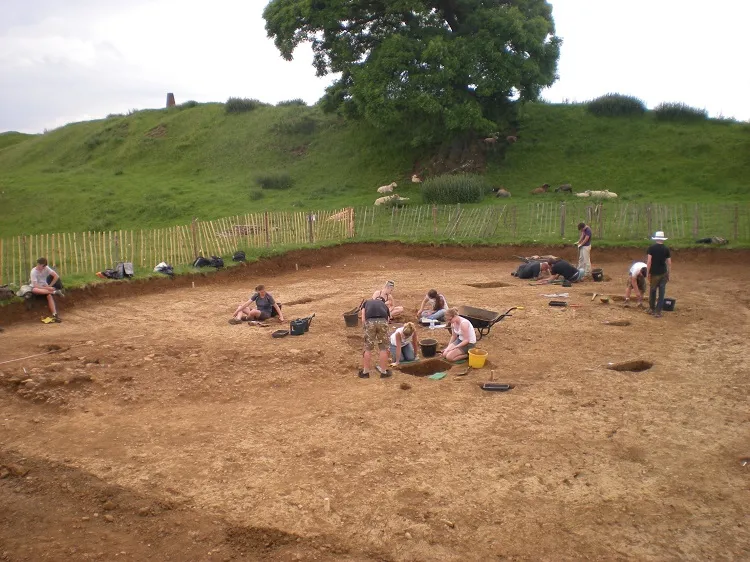
This summer, archaeologists are welcoming tourists to explore an ancient British hillfort full of prehistoric artifacts, as the researchers wrap up an excavation at the site.
The fort, called Burrough Hill, was carved into the side of a 690-foot (210 meters) mound in the modern-day English county of Leicestershire during the Iron Age, around 500 B.C., and was used until the third or fourth century A.D. of the Roman period.
A five-year excavation of the site yielded bones, jewelry, pottery and even game pieces. Archaeologists will open the hillfort to visitors on June 29, hosting guided tours that allow people to touch some of the artifacts, and offering Iron Age combat lessons before the dig comes to a close at the end of the summer. [Image Gallery: Trove of Roman Artifacts]
Last year, the team discovered a collection of stone tools and pottery that dates back to 2800 B.C. In the final stage of the excavation, archaeologists will investigate what they believe could be a second entrance into the fort.
"We have been surprised by the quantity and quality of the information we have uncovered," John Thomas, co-director of the excavation and archaeologist at the University of Leicester, in England, said in a statement. "It has really painted a new picture of life at Burrough Hill and helped to fit the hillfort into a wider view of Iron Age life across the county that we have steadily developed through other excavations over several decades."
Historians believe most hillforts were built to protect against Roman invaders. The whole fort system discovered at Borough Hill spans 523,000 square feet (48,600 square meters) and includes several ramparts that stand 10 feet (3 m) tall. After the Iron Age, the fort was abandoned as a defense post and then used as a farmstead. Later, it hosted a large medieval festival.
The team of archaeologists hopes the discovery of artifacts, such as pottery and quern stones used for grinding corn, will shed light on the lives of humans living in the Iron Age and help historians better understand the transition from the Iron Age into the Roman period.
Get the world’s most fascinating discoveries delivered straight to your inbox.
The University of Leicester uses the large excavation site at Burrough Hill as a dig training site for archaeology students. The site has been designated a scheduled monument, which in the United Kingdom means it is protected and cannot be changed without government permission.
Follow Kelly Dickerson on Twitter. Follow us @livescience, Facebook & Google+. Original article on Live Science.
