Hockey star T.J. Oshie made headlines during the Sochi Olympics for his skills on the ice. Now, he and his newborn daughter are making news after she was born with a rare birth defect. Many people are asking: What the heck is gastroschisis?
If you're a topical expert — researcher, business leader, author or innovator — and would like to contribute an op-ed piece, email us here.
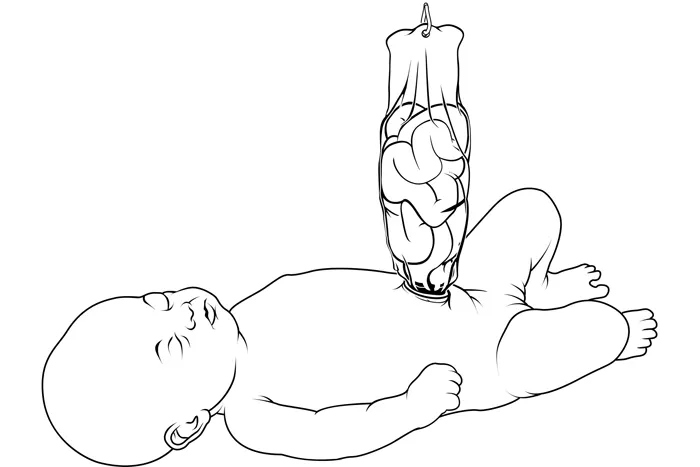
Gastroschisis occurs in approximately 1 in 5,000 live births. A child with this condition is born with his/her intestines outside the abdominal cavity and floating free in the amniotic fluid. Most cases of gastroschisis involve an opening in the abdominal wall that is normally present during pregnancy , but it fails to close prior to delivery, allowing the organs to end up outside the body. The hole or opening is usually found to the right of the baby's belly button. Surgery is needed soon after birth to repair the condition.
Gastroschisis is the most common in a group of abdominal-wall defects. It is often found early in pregnancy during a prenatal ultrasound around 14 to 24 weeks. The exact cause of gastroschisis is not known. Most babies with this condition are born to young mothers who are having their first baby.
Gastroschisis has a survival rate of 95 percent. Babies usually stay in the hospital six to eight weeks and then go home once they are eating well and gaining weight. At Nationwide Children's Hospital we have a strong Intestinal Support Service where we see 20 to 30 children each year children with this condition. For babies born with this rare condition, after surgery most go on to live healthy, happy lives.
Follow all of the Expert Voices issues and debates — and become part of the discussion — on Facebook, Twitter and Google +. The views expressed are those of the author and do not necessarily reflect the views of the publisher. This version of the article was originally published on Live Science.
Sign up for the Live Science daily newsletter now
Get the world’s most fascinating discoveries delivered straight to your inbox.