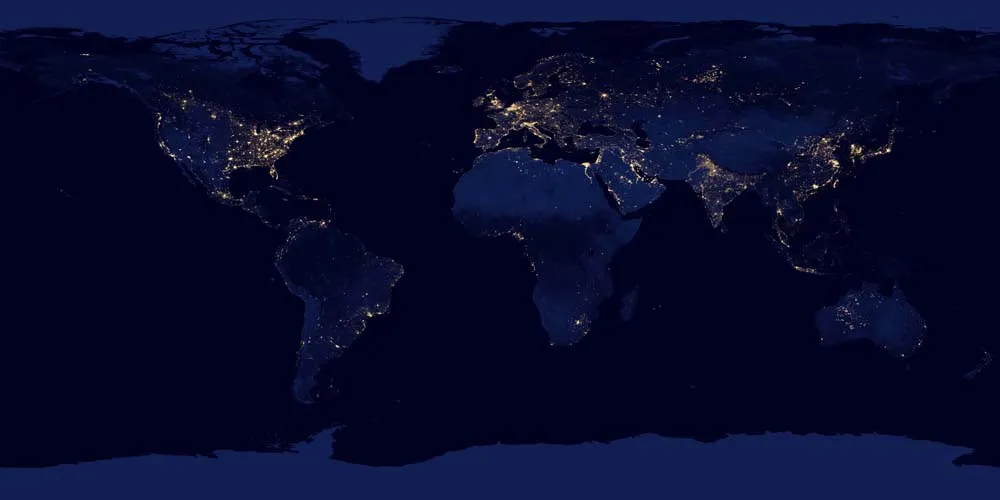
Of the 22 Winter Olympics that have been held since 1924, none have been hosted in the Southern Hemisphere. Nearly the same is true of the Summer Olympics — only two games have been held down south, both in Australia (1956 and 2000), though the 2016 games are scheduled for Brazil, in Rio de Janeiro.
A number of factors play into the Northern Hemisphere's grip on the games, including various political and socio-economic reasons: Lots of financial resources go into planning and holding the games, and many of the world's wealthiest nations are located in the Northern Hemisphere. This year's Sochi Games are expected to cost Russia more than $50 billion — a bill that not many countries would be able or willing to foot.
"To have a Winter Olympics, you need a place with snow," Richard Seager, a geologist at the Lamont-Doherty Earth Observatory of Columbia University in New York, told Live Science. "In the Southern Hemisphere, that would pretty much limit you to the Andes."
That is, of course, excluding Antarctica, which receives plenty of snow, but has too extreme an environment to hold the Olympics.
Chart shows average high and low temperatures of Olympics sites since 1924.
(Image credit: by Ross Toro, Infographics Artist)
The Northern Hemisphere has greater snow accumulation rates than the Southern Hemisphere because more landmasses in the Northern Hemisphere are located at high latitudes, and therefore receive less direct sunlight in the winter and become colder — and more snow-prone — than landmasses in the Southern Hemisphere. Land in the Southern Hemisphere is concentrated closer to the equator, where more direct sunlight increases heat and lowers the chances of snow accumulation.
Still, other Southern Hemisphere locations get a fair amount of snow, including parts of southern Australia and New Zealand. But Australian snowfall is not consistent enough for the games, and New Zealand is a small country that is relatively isolated and difficult to get to — though it could feasibly be a good candidate in the future, Seager said.
Sign up for the Live Science daily newsletter now
Get the world’s most fascinating discoveries delivered straight to your inbox.
In addition to its high latitudes, land in the Northern Hemisphere is also simply more abundant than land in the Southern Hemisphere, which affects regional and global climate patterns in a way that can slightly favor snowfall in the north.
"Northern Hemisphere winters do tend to be cold and snowy since the large landmasses — away from the moderating influences of the ocean — tend to get very cold," Seager said. Snowfall requires both cold air and moisture, Seager pointed out. "The large ocean areas in the Southern Hemisphere prevent winter from getting too cold, except in Antarctica. Hence, the snow falls in high and cold places — the Andes and the New Zealand Alps — where there is also abundant moisture supply from the ocean."
Seager listed Chile and New Zealand as the two most feasible candidates to host the Winter Olympics in the future.
Laura Poppick is a contributing writer for Live Science, with a focus on earth and environmental news. Laura has a graduate certificate in science communication from the University of California, Santa Cruz, and a Bachelor of Science degree in geology from Bates College in Lewiston, Maine. Laura has a good eye for finding fossils in unlikely places, will pull over to examine sedimentary layers in highway roadcuts, and has gone swimming in the Arctic Ocean.