


In Photos: Amazing Human Ancestor Fossils from Dmanisi

Homo skull
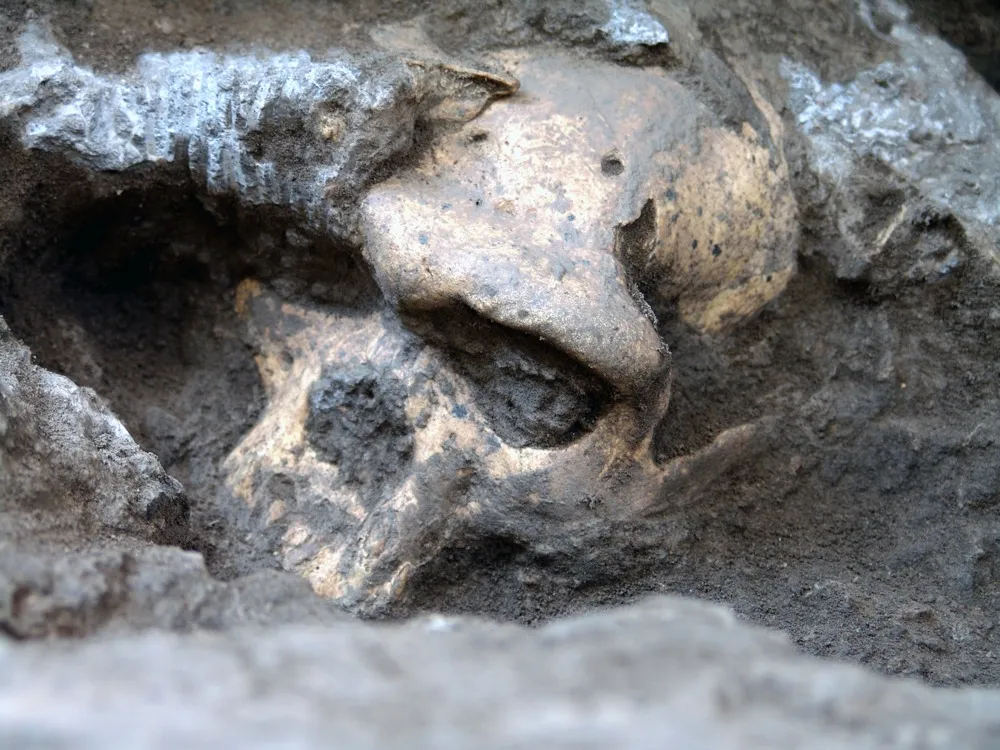
Researchers have analyzed a complete, approximately 1.8-million-year-old skull that was unearthed in Dmanisi, Georgia. The skull (called Skull 5), which was pieced together from the individual's cranium and mandible found separately, suggests the earliest members of our Homo genus (Homo habilis, Homo rudolfensis, Homo erectus and others) belonged to the same species and simply looked different from one another. The research is detailed in the Oct. 18, 2013, issue of the journal Science.
Old Cranium

The skull was discovered alongside the remains of four other early human ancestors, a variety of animal fossils and some stone tools, all of them associated with the same location and time period. (The fossil's cranium shown here next to a large rodent tooth.)
Unique Features

Unlike other Homo fossils, Skull 5 (whose face is shown here) combines a small braincase with a long face and large teeth — features that had not been observed together in an early Homo fossil until now.

Dmanisi cranium

Here, the Dmanisi cranium alongside herbivore fossil remains in situ at the excavation site in Dmanisi, Republic of Georgia.
Beneath the Skin

This illustration reveals what the Homo species discovered in Dmanisi, Republic of Georgia, would have looked like beneath the skin when it lived some 1.8 million years ago.
What a looker!

An artist's conception revealing what "Skull 5" may have looked like some 1.8 million years ago when he (the scientists suspect the remains come from a male) lived.
Medieval Dmanisi

An aerial view of the Dmanisi medieval town with the excavation site, where researchers discovered the skull of an extinct human species, on the right.
Get the world’s most fascinating discoveries delivered straight to your inbox.
Dmanisi Excavation

An aerial view of the Dmanisi excavation site (foreground), which has been just partially excavated so far, and a medieval town.
Skull Line-up

Here the five skulls, including Skull 5, discovered at Dmanisi in the Republic of Georgia and dating back some 1.8 million years.
Skulls in a Setting

Here the five skulls, including Skull 5, discovered at Dmanisi in the Republic of Georgia and dating back some 1.8 million years, with a Dmanisi landscape in the background.

For the science geek in everyone, Live Science offers a fascinating window into the natural and technological world, delivering comprehensive and compelling news and analysis on everything from dinosaur discoveries, archaeological finds and amazing animals to health, innovation and wearable technology. We aim to empower and inspire our readers with the tools needed to understand the world and appreciate its everyday awe.