













Key to a Good Memory: Predict What You Need to Remember

It's one thing to stuff a lot of facts into your brain. Marking them as important is a whole other talent.
Yet this predictive ability is a key to having a good memory, a new brain-imaging study suggests.
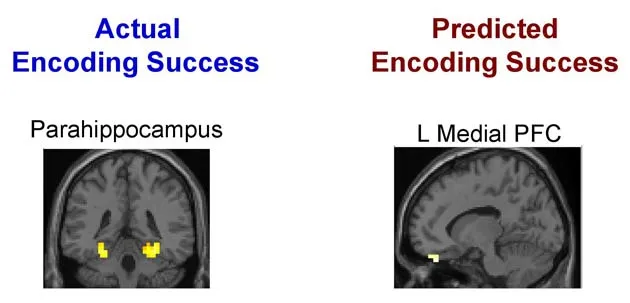
While one part of the brain was very active when study subjects were memorizing something, a separate area lit up when they were predicting if they'd need to recall the information later, the images revealed.
Study skill
Predicting is an important part of successful learning because it allows us to judge whether we've studied enough or need to review more, explained lead researcher John Gabrieli of MIT.
"We've known through psychological studies that the brain performs these two functions, encoding the memory and predicting whether the information will be later recalled,"Gabrieli said. "This is our first insight into the different brain mechanisms for memory and prediction, what psychologists call judgments of learning."
The memory encoding region lies in the medial temporal lobe (MTL) near the ear. The predicting region lies in the ventromedial prefrontal cortex (VMPFC) above the eyes. The two regions communicate with each other, the researchers say.
Get the world’s most fascinating discoveries delivered straight to your inbox.
Room for improvement
In essence, Gabrieli and his colleagues say, the mind seems to monitor the brain, telling you if you need to review some information again or if you know it cold.
Writing in the December issue of the journal Nature Neuroscience, Gabrieli and colleagues conclude that people who make more accurate prediction are better learners. Some people can intuitively judge their own memory, the scientists say, while others must learn the skill.
Learning more about the mechanics of this introspection might help people become better learners, Gabrieli said.
