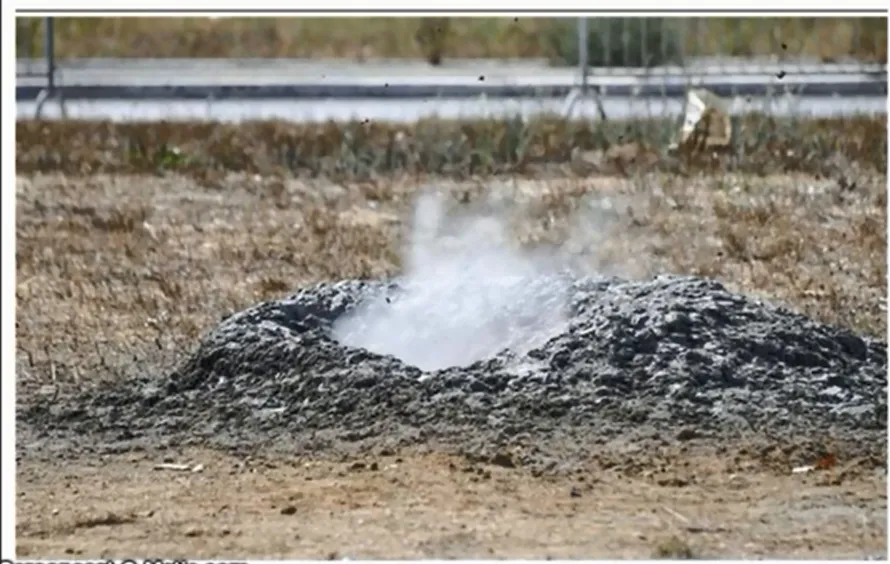
'Geyser' Erupts at Rome's Fiumicino Airport
Get the world’s most fascinating discoveries delivered straight to your inbox.
You are now subscribed
Your newsletter sign-up was successful
Want to add more newsletters?
Delivered Daily
Daily Newsletter
Sign up for the latest discoveries, groundbreaking research and fascinating breakthroughs that impact you and the wider world direct to your inbox.
Once a week
Life's Little Mysteries
Feed your curiosity with an exclusive mystery every week, solved with science and delivered direct to your inbox before it's seen anywhere else.
Once a week
How It Works
Sign up to our free science & technology newsletter for your weekly fix of fascinating articles, quick quizzes, amazing images, and more
Delivered daily
Space.com Newsletter
Breaking space news, the latest updates on rocket launches, skywatching events and more!
Once a month
Watch This Space
Sign up to our monthly entertainment newsletter to keep up with all our coverage of the latest sci-fi and space movies, tv shows, games and books.
Once a week
Night Sky This Week
Discover this week's must-see night sky events, moon phases, and stunning astrophotos. Sign up for our skywatching newsletter and explore the universe with us!
Join the club
Get full access to premium articles, exclusive features and a growing list of member rewards.
On Saturday morning (Aug. 24), residents of Rome were startled to discover that a steaming vent, spitting out a steady stream of water and mud, had erupted from the ground near a runway at Rome's busy Fiumicino airport.
Geologists and engineers are investigating the vent to ensure that it's not a broken pipe or some other accident, according to VolcanoDiscovery. Assuming that it's not manmade, it could be a fumarole, a vent of steaming-hot hydrothermal water that erupts at the Earth's surface.
"There are a lot of hot springs in the area around Rome, so it might not be surprising that new vents could open," Erik Klemetti, assistant professor of geosciences at Denison University in Granville, Ohio, told LiveScience.
"Likely this doesn't lead to anything more than maybe a new hot spring, if it is related to the normal geothermal activity across the area," Klemetti said. "Once volcanologists can sample the gases being emitted, we might have a better idea of what the ultimate source of the vent might be."
Follow Marc Lallanilla on Twitter and Google+. Follow us @livescience, Facebook & Google+.
Get the world’s most fascinating discoveries delivered straight to your inbox.