













Ocean Critters Affected by Faraway Events
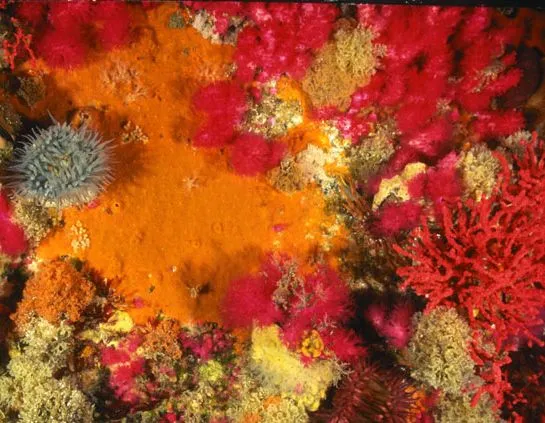
Preserving a local ocean species requires protecting the entire region, according to new research that spanned seven continents.
Unlike on land, where it is easier to set aside discrete areas for plants and animals, the fluid nature of the sea means that saving a stretch of reef, or a specific coral, ideally involves protecting the region that surrounds and supports it.
"The work is a wake-up call," said Jon Witman, associate professor of biology at Brown University. "We need to think about regional processes if we want to preserve biodiversity."
The new research found that the number of species in a small area, usually less than half a square mile, was proportional to the number of species in the region, which could cover thousands of square miles.
Witman explained that preserving biodiversity in the ocean is not as reliant on a single preserve as on creating many reserves across a broad area. These dispersed sanctuaries should concentrate on locations that produce and spread eggs, seeds and important nutrients for species survival, according to Witman.
The results of the project, reported in the online edition of the Proceedings of the National Academy of Sciences, also contributed convincing evidence that life in the oceans increase toward the equator, as other studies had suggested. Previous to the new study ecologists debated the actual numbers of organisms in areas like Antarctica.
During the 14-year effort, scientists cataloged nearly 3,000 invertebrates and their distribution by analyzing 1,500 photographs taken throughout 12 biologically distinct regions from Antarctica to Australia. Each of the images is a snapshot of life that, according to the new study, is dependent on large-scale forces like ocean currents, global warming, and pollution.
Get the world’s most fascinating discoveries delivered straight to your inbox.