Rare Whale Spotted for First Time in 61 Years
Get the world’s most fascinating discoveries delivered straight to your inbox.
You are now subscribed
Your newsletter sign-up was successful
Want to add more newsletters?
Delivered Daily
Daily Newsletter
Sign up for the latest discoveries, groundbreaking research and fascinating breakthroughs that impact you and the wider world direct to your inbox.
Once a week
Life's Little Mysteries
Feed your curiosity with an exclusive mystery every week, solved with science and delivered direct to your inbox before it's seen anywhere else.
Once a week
How It Works
Sign up to our free science & technology newsletter for your weekly fix of fascinating articles, quick quizzes, amazing images, and more
Delivered daily
Space.com Newsletter
Breaking space news, the latest updates on rocket launches, skywatching events and more!
Once a month
Watch This Space
Sign up to our monthly entertainment newsletter to keep up with all our coverage of the latest sci-fi and space movies, tv shows, games and books.
Once a week
Night Sky This Week
Discover this week's must-see night sky events, moon phases, and stunning astrophotos. Sign up for our skywatching newsletter and explore the universe with us!
Join the club
Get full access to premium articles, exclusive features and a growing list of member rewards.
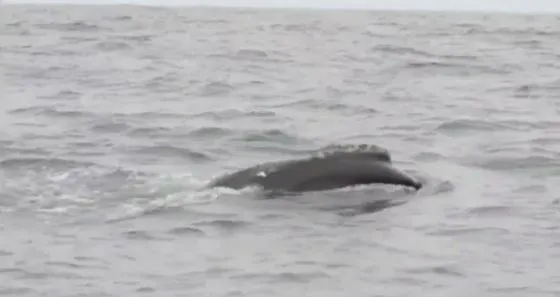
A whale biologist has spotted and filmed an endangered North Pacific right whale (Eubalaena japonica) off the coast of British Columbia for the first time in 61 years, according to a report. The whale is one of the world's rarest, with an estimated global population of about 500 and only 50 in the eastern Pacific.
Researcher John Ford has kept an eye out for them his whole life but had given up hope of seeing one of the animals, he told The Province, a news website based in Vancouver. "We would never have imagined that we would actually find one," he said.
The animals were heavily hunted in the 1800s, and were called "right whales" because they were the "right" whales to hunt: They are enormous (weighting up to 70 tons (63,500 kilograms)), slow and they also float after being killed. They were desired for their oil and baleen, the filtering material in their mouths used for catching small animals, which were made into corsets and other products.
Email Douglas Main or follow him @Douglas_Main. Follow us @livescience, Facebook or Google+.
Get the world’s most fascinating discoveries delivered straight to your inbox.