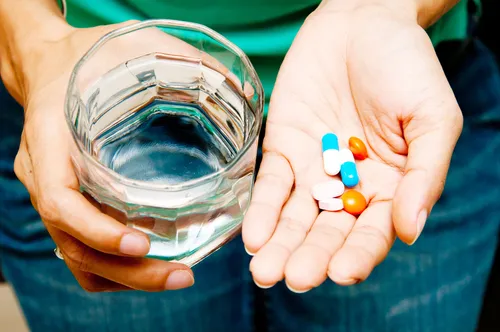
While placebos are also known as sham treatments because, by definition, they don't really do anything, Hunter cautioned against looking at the placebo effect in the same way.
The placebo effect plays a role in animals that don't have conscious expectations, and brain studies show benefits from placebo treatments, demonstrating that the placebo effect goes beyond deception.
"It's not 'fake,'" Hunter said, noting that even people taking beneficial medications can have an enhanced response from that knowledge.
Going a step further, she pointed to research she and her colleagues at UCLA performed, which showed that receiving a placebo early in an experiment correlated with how patients fared when given the actual drug.
"How you respond to a placebo, and the changes that go on in your brain from having positive response, affect how you will do on medication," she said. "Each is contributing something important to relieving the symptoms."
Joe Brownstein is a contributing writer to Live Science, where he covers medicine, biology and technology topics. He has a Master of Science and Medical Journalism from Boston University and a Bachelor of Arts in creative writing and natural sciences from Johns Hopkins University.