













Nicotine Patches Don't Help Pregnant Smokers, Study Finds

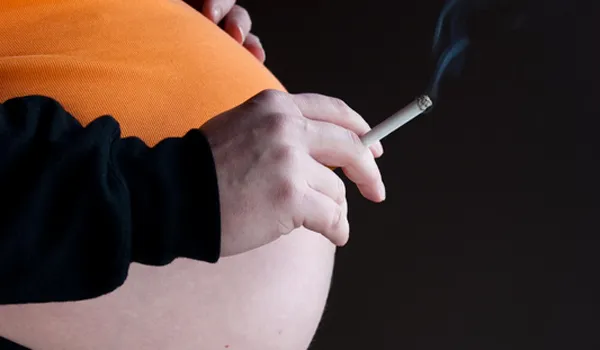
Nicotine patches do not help pregnant women quit smoking, a new study says.
Pregnant women in the study who used nicotine patches were just as likely to continue smoking until their delivery date as women who used a placebo, the researchers said.
"Clearly, standard dose nicotine patches do not work in pregnancy as well as they do in the general smoking population," study researcher Tim Coleman, of the University of Nottingham in the United Kingdom, said in a statement.The new study is the largest of its kind to address this question.
The findings support the current guidelines from the Centers for Disease Control and Prevention that advise pregnant women against using nicotine patches because they have not been shown to help with quitting, said Dan Jacobsen, a nurse-practitioner at the Center for Tobacco Control, part of the North Shore-Long Island Jewish Health System in Great Neck, N.Y.
Instead, pregnant women who smoke should use other strategies to quit smoking, Jacobsen said, including stress management. Jacobsen's center has incorporated social media into smoking cessation therapies, using text messages to encourage and support pregnant women as they try to quit.
Smoking during pregnancy can lead to a number of health complications for the baby, including miscarriage, premature birth, low birth weight and sudden infant death syndrome (SIDS).
Smoking in pregnancy
Get the world’s most fascinating discoveries delivered straight to your inbox.
The study involved 1,050 women who were 12 to 24 weeks pregnant and smoked five or more cigarettes per day. Half of the women were randomly assigned to receive a nicotine patchfor eight weeks, and half received a placebo patch.
After one month, the patch seemed somewhat effective: 21.3 percent of women in the nicotine patch group had refrained from smoking, compared with 11.7 percent of placebo group.
But this effect did not last. By delivery, 9.4 percent of women in the nicotine group had quit smoking, compared with 7.6 percent of the placebo group, a difference small enough that it could have been due to chance.
Very few participants actually kept up with their treatment. Just 7.2 percent of women in the nicotine group and 2.8 percent of women in the placebo group continued wearing their patchesfor more than one month.
The number of stillbirths, miscarriages and babies of low birth weight were similar in both groups, the researchers said.
Higher doses
Some women metabolize nicotine 60 to 120 times faster during pregnancy, which may reduce nicotine levels in their bodies and increase withdrawal symptoms. A higher nicotine dose may be needed for the drug to be effective in pregnant women, the researchers said.
Women included in the study had characteristics of people who are highly addicted to cigarettes, Jacobsen said. For instance, the majority smoked their first cigarettes within 15 minutes of waking. (The shorter the time between waking and the first cigarette, the more addicted the person is, Jacobsen said.) It's not clear whether less addicted individuals would respond better to the therapy, Jacobsen said.
Because so few women in the study adhered to the nicotine patch therapy, more research is needed to confirm it does not cause health problems in infants, the researchers said.
The study is published in the March 1 issue of the New England Journal of Medicine.
Pass it on: Nicotine patches don't work for pregnant women.
Follow MyHealthNewsDaily staff writer Rachael Rettner on Twitter @RachaelRettner. Find us on Facebook.

Rachael is a Live Science contributor, and was a former channel editor and senior writer for Live Science between 2010 and 2022. She has a master's degree in journalism from New York University's Science, Health and Environmental Reporting Program. She also holds a B.S. in molecular biology and an M.S. in biology from the University of California, San Diego. Her work has appeared in Scienceline, The Washington Post and Scientific American.