














Why Are Barns Traditionally Painted Red?
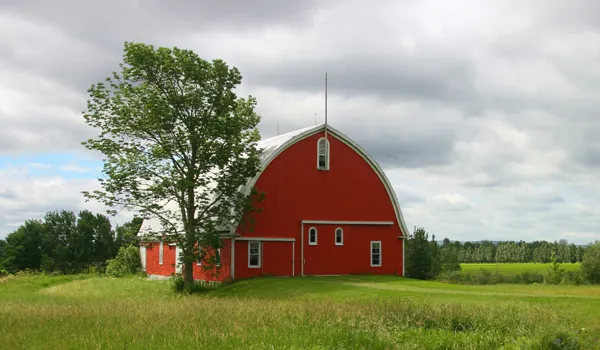
The image of a quaint red barn against green grass is as American as apple pie, but where does the tradition come from? Although there are many myths about their rusty hue, early-day barns were painted red out of convenience and frugality.
One belief is that barns are red so a farmer's cows can find their way home, but if so, that's a failed strategy cattle are colorblind to the colors red and green .
Others believe the popularity of red barns came from copying Scandinavian farmers, who painted their properties in rusty hues so that they would appear to be made of brick, a material they considered to be a sign of wealth.
But barns weren't originally red in fact, they weren't painted at all. The early farmers that settled in New England didn't have much extra money to spend on paint , so most of their barns remained unpainted. By the late 1700s, farmers looking to shield their barns' wood from the elements began experimenting with ways to make their own protective paint.
A recipe consisting of skimmed milk, lime and red iron oxide created a rusty-colored mixture that became popular among farmers because it was cheap to make and lasted for years. Farmers were able to easily obtain iron oxide the compound that lends natural red clay its coppery color from soil. Linseed oil derived from flax plants was also used to seal bare wood against rotting, and it stained the wood a dark coral hue.
Farmers also noticed that painting their barns with the homemade paint kept the buildings warmer during the wintertime, since the darker color absorbs the sun's rays more than plain, tan wood. So red paint spread in popularity due to its functionality and convenience, becoming an American tradition that continues to this day.
Original article on Live Science.
Get the world’s most fascinating discoveries delivered straight to your inbox.