














Why Do Cats Bury Their Poop?
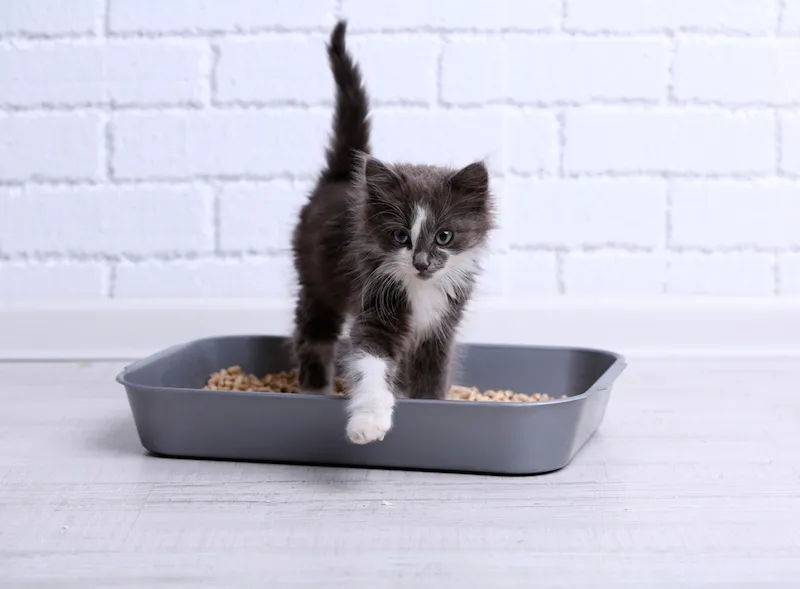
Dogs bury bones, cats bury poop. Hiding waste is a natural feline instinct , but it's not just because cats are obsessed with cleanliness.
The act of meticulously burying their waste stems from cats' long history of using urine and feces to mark their territory. Cat poop may all smell the same to us, but cats can tell their waste apart from another's thanks to unique chemical scent markers called pheromones, which are present in their urine and feces.
In the wild, dominant cats including those of the Panthera genus, such as lions, tigers , leopards and jaguars that are competing for territory often do not bury their excrement as a way of signaling that they want to claim a particular area. Smaller, weaker or more submissive wild cats bury their feces as a way of ensuring that dominant cats do not feel challenged.
Wild cats will also hide their waste to avoid attracting unwanted attention from predators to themselves or their nest of kittens . Domesticated indoor cats (Felis catus) harbor the same strong, self-protecting instincts. Even though there are no predators in your home, your cat may not be so sure, and will bury its waste just in case.
Related: Does catnip really make cats 'high'?
Your cat's careful burying habits are also Fluffy's way of saying that she recognizes you as the dominant "cat" of the house.
"In an undisturbed home, all domestic cats see themselves as subordinates of their human owners, so under normal circumstances, all domestic cats use litter trays or bury their feces in the garden," zoologist and ethologist Desmond Morris writes in his book, "Catlore."
Get the world’s most fascinating discoveries delivered straight to your inbox.
One reason that your cat might choose not to use the litter box may be that they consider themselves to be dominant over you. This is not always the case, however, as this seemingly rebellious behavior can also be caused by an illness, urinary tract infection, stomach problems or simply a lack of training in how to properly use a litter box. A cat's natural burying instinct is reinforced by watching their mothers perform the task, so some kittens may need to be taught how to use a litter box.
Cats aren't the only ones who bury their waste to throw off predators and settle territory disputes armadillos, woodchucks, minks and some other weasels are also known to cover their excrement.
Follow Remy Melina on Twitter @RemyMelina. Follow Live Science @livescience, Facebook & Google+.