













Do Bats Hibernate?
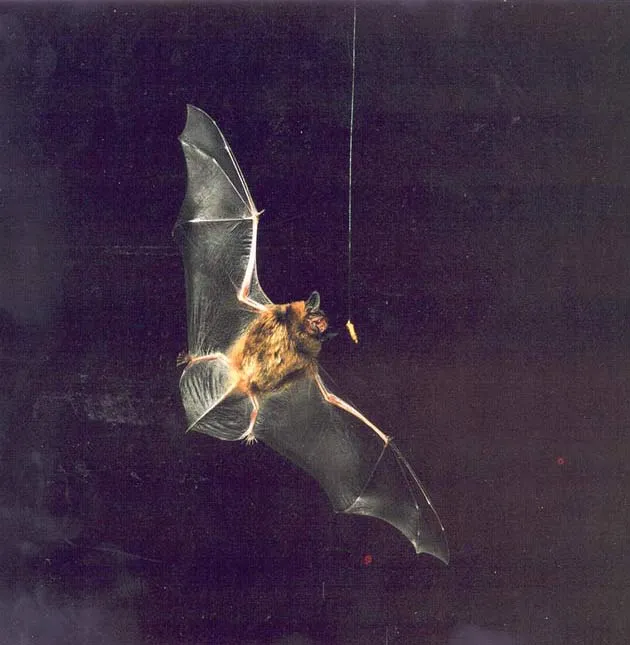
Besides being nocturnal, some bat species are known to pack it in during the winter as well. Not all bats hibernate, but those that do usually live at high latitudes where insect prey becomes scarce during cold months. During this dormant period, they can often be found clustered on cave walls or ceilings, curled up like furry little balls.
Hibernating bats make it through such a deep slumber — which can last over six months — on only a few grams of stored fat. They accomplish this by dropping their body temperature and slowing their metabolism to the point where heart rates wind down to a mere 10 beats a minute.
By the time spring rolls around, the bats typically will have lost roughly half of their body weight.
While hibernation has some obvious benefits, it comes with some undesired side effects.
“During hibernation, metabolic wastes build up and immune responses may be hindered,” explains Justin Boyles of the Center for North American Bat Research and Conservation. “Several papers have shown that some species will hibernate less during the winter if their fat stores are enlarged.”
Most tropical bat species, though, are well fed year-round and generally never need to take time off.
Follow Life's Little Mysteries on Twitter @llmysteries. We're also on Facebook & Google+.
Get the world’s most fascinating discoveries delivered straight to your inbox.