














Sure Sign of Spring: Snow Melts at Great Sand Dunes
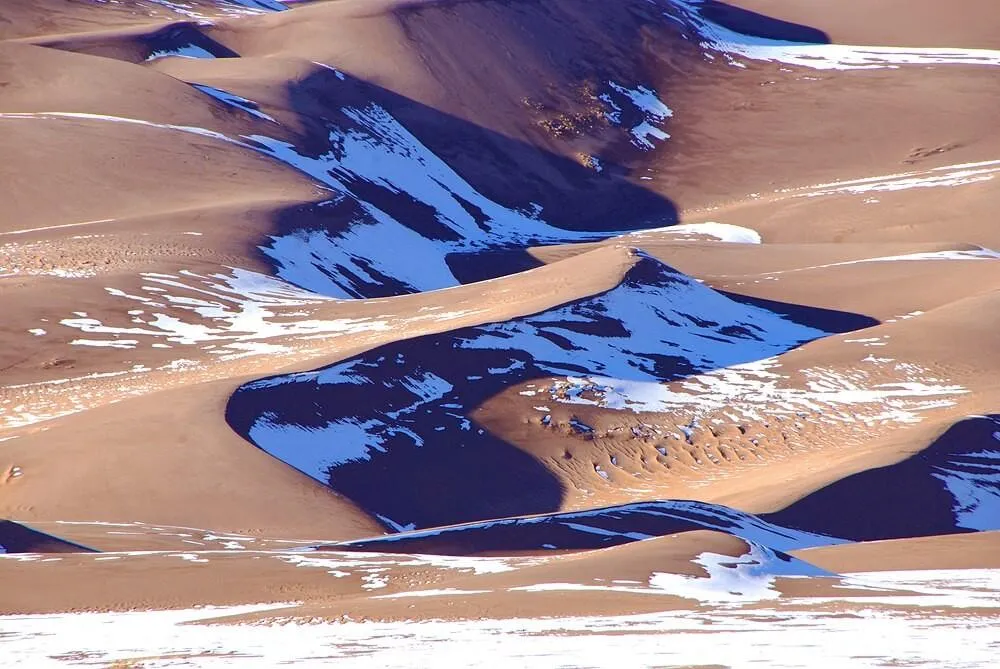
Snow is melting from the dunes at Great Sand Dunes National Park. That's a sure sign that spring is here. It's also the best time for one of the park's favorite pastimes: sandboarding.
Great Sand Dunes National Parkin southern Colorado is home to the tallest dunes in North America, spread over 30 square miles (78 square kilometers). The Sangre de Cristo Mountains loom in the background, but the dunes are the main attraction here. The dunefield was created over millions of years as the sediment from the nearby San Juan Mountains was deposited in lakes and rivers and then exposed, dried and blown away by the wind.
Now that winter's snow is retreating from the dunes, it's time to break out the sandboards and sand sleds. With a special design and slick bases, these apparatuses are specifically made for sand. They work best for sliding in most conditions, but a plastic sled will do in a pinch.
The best time to hit the dunes is in the spring; the remaining winter snow adds just the right touch of moisture. The sand can be too soft during dry times. Early morning is the best time for sledding due to the extreme afternoon temperature, which can bake the sand to 150 degrees Fahrenheit (65.5 degrees Celsius).
Sandboarding and sledding are OK anywhere on the dunefield away from vegetated areas. Walk about 1.25 miles (1.6 km) from the main visitor parking area to get to the good slopes. Feeling like a daredevil? Slog 3 miles (4.8 km) through the sand to Star Dune, which rises 750 feet (229 m).
Follow OurAmazingPlanet for the latest in Earth science and exploration news on Twitter @OAPlanet. We're also on Facebook & Google+.
Get the world’s most fascinating discoveries delivered straight to your inbox.