














Astronaut Photo: Sahara Dust Enters Caribbean Skies

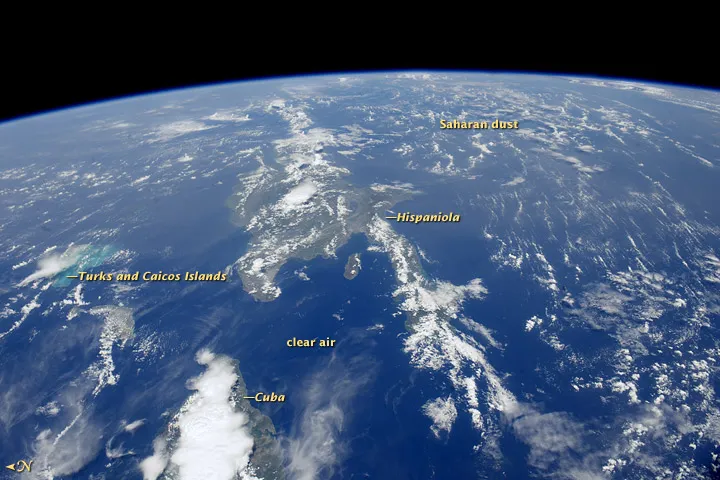
Astronauts sailing around the Earth aboard the International Space Station recently spotted a dull haze blanketing the skies over the Caribbean — dust from Africa's vast Sahara Desert that had blown all the way across the Atlantic Ocean.
The dust likely originated some 5,000 miles (8,000 kilometers) to the east, in the dry reaches of northern Mali, according to NASA figures, although some satellite data suggest the dust can come from as far east as Chad or Sudan.
In the photograph, captured in July 2012, the Saharan dust covers the skies over the island of Hispaniola — home to Haiti and the Dominican Republic — and the Turks and Caicos Islands, yet Cuba's skies are dust-free.
It takes about a week for the dust to travel from Africa's deserts to the Caribbean, and in recent years, researchers have learned that dust from the Sahara travels across the ocean and reaches the Western Hemisphere during every month of the year.
The traveling dust has been linked to some troubling phenomena, from coral disease to allergies in humans to dangerous algae blooms known as red tides.
Dust blown in from Africa may also play a role in hurricane formation. Some researchers suspect the high-flying dry dust can break up the rotating storms, but others say more data are needed before reaching such conclusions.
Follow OurAmazingPlanet for the latest in Earth science and exploration news on Twitter @OAPlanet. We're also on Facebook & Google+.
Get the world’s most fascinating discoveries delivered straight to your inbox.
