













Why Baby Calms Down When Carried
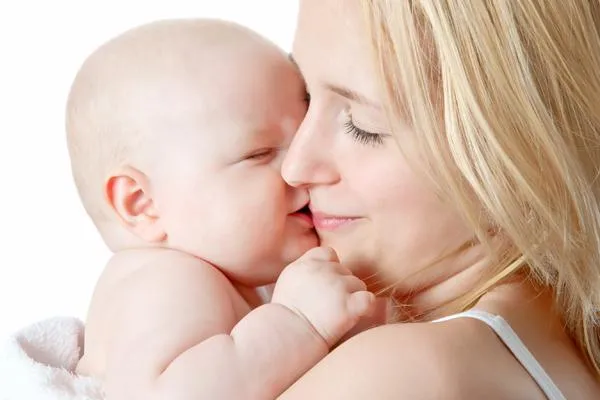
A new study from Japan confirms what many mothers may know instinctively: Picking up and carrying a fussy baby usually calms down and relaxes the child, making the move a good one for both moms and infants.
When mothers in the study carried their babies while walking around, the infants became noticeably more relaxed and stopped crying and squirming. The babies' rapidly beating hearts also slowed down, evidence that the children were feeling calmer.
"Infants become calm and relaxed when they are carried by their mother," said study researcher Dr. Kumi Kuroda, who investigates social behavior at the RIKEN Brain Science Institute in Saitama, Japan. The study observed strikingly similar responses in mouse babies.
Since carrying (meaning holding while walking) can help stop an infant from crying, Kuroda said, it can offer mothers a way to soothe short-term irritations to their children, such as scary noises or vaccinations.
The findings were published online today (April 18) in the journal Current Biology.
A strong calming effect
For the small study, researchers monitored the responses of 12 healthy infants ages 1 month to 6 months. The scientists wanted to discover the most effective way for mothers to calm a crying baby over a 30-second period — simply holding the baby or carrying the infant while walking.
Get the world’s most fascinating discoveries delivered straight to your inbox.
Young babies carried by a walking mother were the most relaxed and soothed, compared with infants whose mothers sat in a chair and held them, the study found. As a mother stood up and started to walk with her child cradled close in her arms, scientists observed an automatic change in the baby's behavior.
These results held even after the researchers took into account other factors, such as the child's age and sex, and the mother's age and walking speed.
Kuroda said she was surprised by the strength of the calming effect from maternal holding and walking. In observing experiments on both humans and mice, she was amazed at how quicklythe heart rate slowed, and by how much immediately after a mother started walking. (Mother mice pick up their young by the scruff of their neck with their mouths.)
According to the researchers, maternal walking may be more effective in calming infants than other kinds of rhythmic motion, such as rocking.
Advice for parents
When an underlying reason for crying persists, such as hunger or sustained pain, the infant may start crying again soon after the end of carrying.
That's why Kuroda recommended that when a baby starts crying, a brief period of carrying may help parents to identify the cause of the tears. She acknowledged carrying might not completely stop the crying, but it may prevent parents from becoming frustrated by a crying infant.
The findings also have implications for one parenting technique in which parents let babies cry as a way to help them learn to fall asleep by themselves, the researchers said.
"Our study suggests why some babies do not respond well to the 'cry-it-out' parenting method," Kuroda said.
Proponents of the technique advise parents to let infants, after a certain age, cry themselves to sleep — without mom or dad comforting them — in the hopes the baby will learn how to soothe himself or herself.
But Kuroda said that calming by maternal carrying, as well as crying during separation, are both built-in mechanisms for infant survival. These behaviors have been hard-wired for millions of years. "Changing these reactions would be possible as infants are flexible, but it may take time," she said.
Although this study looked at a baby's behavior in response to its mother, Kuroda said the effect is not specific to moms, and any primary caregiver for the infant can perform the carrying. The researchers observed the same carrying-induced calming effects when fathers, grandmothers and an unfamiliar female with caregiving experience carried babies who were under 2 months old, Kuroda said.
Pass it on: Picking up and carrying a crying infant will automatically calm the child.
This story was provided by HealthNewsDaily, a sister site to LiveScience. Follow MyHealthNewsDaily @MyHealth_MHND, Facebook & Google+.
Cari Nierenberg has been writing about health and wellness topics for online news outlets and print publications for more than two decades. Her work has been published by Live Science, The Washington Post, WebMD, Scientific American, among others. She has a Bachelor of Science degree in nutrition from Cornell University and a Master of Science degree in Nutrition and Communication from Boston University.