













Inventor Spills Wine Secret: Put It in a Blender

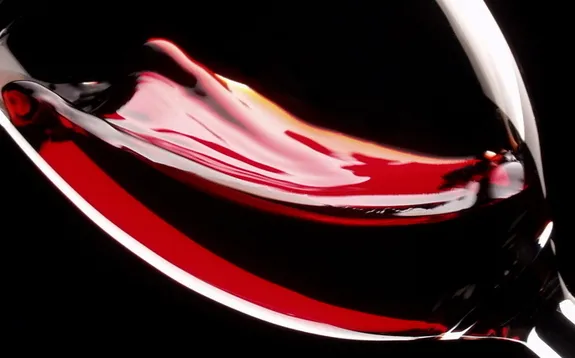
BOSTON — Decanting wine is a common tactic among some oenophiles, and involves pouring the drink through an aerator or into a special container to let it "breathe." But inventor and amateur chef Nathan Myhrvold has an even better and faster way: Put it in the blender.
This agitates the wine and makes it react with air more quickly, performing the same role as decanting but faster, Myhrvold said in a speech here at the annual meeting of the American Association for the Advancement of Science on Saturday (Feb. 16).
But the real reason to do it? "The looks on people's faces," Myhrvold said. "If you do this with a wine expert in the room — it's as if you committed some deeply unnatural act."
"But it's food," he continued. "Why is it okay with daiquiris and not with Bordeaux?"
There are several possible explanations for why decanting, or blending, improves the taste, said Myhrvold, who holds nearly 250 technology-related patents and recently wrote a tome about the science of cooking, entitled "Modernist Cuisine: The Art and Science of Cooking" (The Cooking Lab, 2011). The practice could lead to the oxidization of certain flavor compounds, vent pent-up gases like sulfur dioxide or release other volatile components from the wine, he said. [Science You Can Eat: 10 Odd Facts About Food]
Myhrvold performed his magic for a Spanish duke, one of the top winemakers in Spain, throwing the royal's favorite red wine into the blender. The duke did a blind taste test and preferred the blended one, but didn't believe Myhrvold afterward. If he'd "been a duke from years of old he would have run me through with his sword right there," said Myhrvold, who was once the chief technology officer for Microsoft and now the CEO of the patent company Intellectual Ventures.
Myhrvold shared several other secrets from his investigations into the science of cooking. Among them:
Get the world’s most fascinating discoveries delivered straight to your inbox.
- Cucumbers are less solid than milk. The former are 95 percent water, while milk is 88 percent water.
- Charcoal grills work via radiant energy, which leads to uneven cooking. To greatly improve a grill's efficiency, layer the inside with aluminum foil, which reflects these electromagnetic waves.
- If you put ground peas into a laboratory-grade centrifuge and spin it for about an hour, you will eventually get three layers of pea sediment. The middle layer yields "pea butter," a most delicious substance that contains no fat.
Reach Douglas Main at [email protected]. Follow him on Twitter @Douglas_Main. Follow LiveScience on Twitter @livescience. We're also on Facebook& Google+.
