














What Color Are Our Cells? Kids' Biology Questions Answered
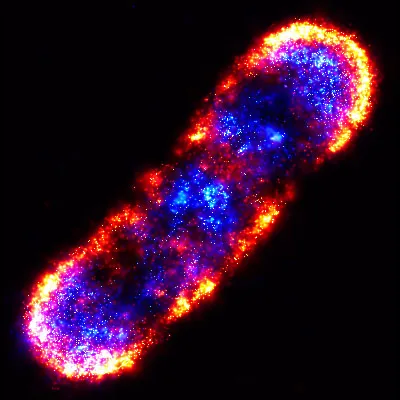
During a live online chat dubbed "Cell Day," scientists at the National Institutes of Health recently fielded questions from middle- and high-school students across the country about the cell and careers in research. Here's a sampling of the questions and answers.
How many different types of cells are there?
Your body contains trillions of cells, organized into more than 200 major types.
Do all cells have the same structure?
No. Different cells have different functions and different sizes and shapes. For example, red blood cells are round in the normal state, while nerve cells are very elongated. Some bacterial cells have flagella for movement, some cells are large (such as mammalian egg cells), and others are much smaller (such as sperm cells).

Are cells specific colors or can they be any color?
In nature, most cells are transparent and without color. Animal cells that have a lot of iron, like red blood cells, are deep red. Cells that contain the substance melanin are often brown. It is the absence of melanin that makes eyes blue. Scientists have tricks for making different parts of cells glow with fluorescent dyes. These colors are artificial, but beautiful.
Get the world’s most fascinating discoveries delivered straight to your inbox.
If cells make up us, what makes up cells?
Cells are made of organic molecules, such as lipids, carbohydrates, nucleotides and amino acids. The cell uses chemical energy to make polymers of these molecules, for example to make DNA and RNA strands from nucleotides and proteins from amino acids. Cells also contain inorganic molecules, such as salt and metals in small amounts, and lots of water, too.
Is it possible for an animal cell to "spring a leak" and, if so, how would they repair themselves?
Cells need to regulate the passage of molecules into and out of the cell. This process is normally under tight control. However, there can be circumstances that cause the cell to become "leaky" (e.g., disruption of the balance in the concentration of molecules inside and outside the cell). Some of these problems can be corrected by the cell, but too much leakage is fatal.

How long do cells live?
It depends. The cells that line your digestive system turn over very rapidly. Brain cells last a very long time. In fact, scientists thought that once our brain finished growing, the cells we start with are the only ones we'll ever have. Over the past few years, scientists have figured out that brain cells do get replaced. This has changed the way we think about the potential of the brain to recover from some kinds of injuries or illnesses.
If an organism dies, do all of its cells immediately die too?
No, some cells such as those in hair cells live on for a while after a person dies. Other cells that continue include fingernail cells.
Why is exercise good for your cells?
Exercise is good for your cells and your tissues because it helps to "train" them so they perform better. For example, muscle cells will produce their energy molecules better and lung cells will be able to use oxygen more efficiently. Exercise also is good for your health because it increases the release of molecules that will boost your body's immune system.
Do my cells think?
Individual cells don't "think" in the way our complete brains think. Individual cells do react to their surroundings and change their behaviors according to programs set up in their genes, but that's not really thinking. That requires the complex and specially organized function of hundreds of billions of nerve cells in the brain.
How do scientists study cells when they are so small?
Cells are not really that small for modern research. We actually have instruments to study individual molecules and atoms. Typically, cells range in size from 10 to 300 microns (1 micron is one millionth of a meter). Molecules, which are also studied in biology, are a few billionths of a meter in size. Cells are studied with light microscopes and other instruments, particularly in combination with molecules that cause cells to light up.

Why do we learn about cells?
When you think about the fact that you started out as a single cell, why wouldn't you want to learn about how cells divide, let you do your favorite things, contribute to disease and aid the development of treatments or cures that you one day may need! By understanding how cells work, we can better understand what happens when things go wrong.
What is your favorite cell?
My favorite cell is the neuron. Neurons have many different shapes and sizes; some are over 3 feet long! Neurons are essential for thinking and all our senses. We know a lot about how neurons work, but I think we are just seeing the tip of the iceberg regarding our understanding of the senses, how we think and how nerve cells respond to drugs.
What's your favorite part about biology?
My favorite part of biology is understanding how all these small machines work together to create an organism. Biology is a complex and intricate dance of components. I became a cell biologist when I looked down the microscope in the 6th grade!
This Inside Life Science article was provided to LiveScience in cooperation with the National Institute of General Medical Sciences, part of the National Institutes of Health.