













Right Light Keeps Van Gogh's Flowers Fresh

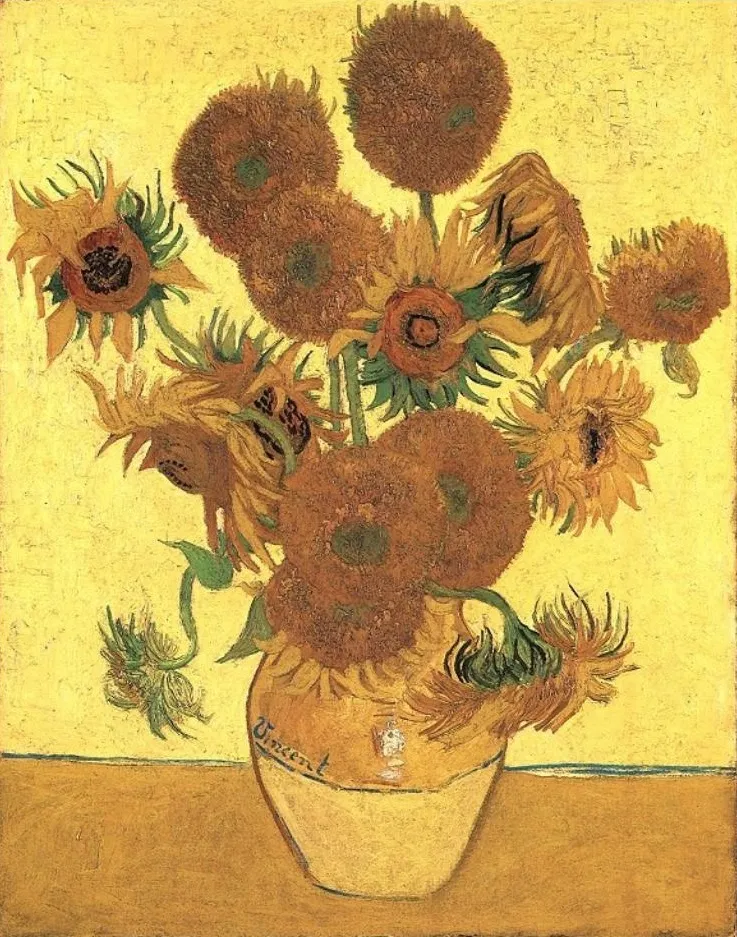
Much like the painter himself, the chrome yellow pigment that Vincent van Gogh favored is famously unstable. But chemists say the right light can help keep the artist's lustrous sunflowers and wind-swept wheat stalks from turning a muddy color on the canvas.
Scientists have previously shown that the yellow paint used by van Gogh and some of his 19th century peers is especially susceptible to darkening because of a change in the oxidation state of chromium — a chemical element in the pigment — over time.
In a new study, European researchers whipped up pigments in the lab mimicking the yellow van Gogh used and they took a historical paint sample from Belgian artist Rik Wouters. They then examined how shining different types of light on the pigments would alter their color.
The team found that the yellows were highly susceptible to browning under UV and blue light. What's more, pigments that contained more than 50 percent sulfates had higher rates of darkening.
The researchers recommended that art collectors and gallery owners should minimize their paintings' exposure to light in these ranges (light with a wavelength shorter than 525 nanometers) to preserve their original vibrancy.
The research was detailed online Wednesday (Nov. 14) in the journal Analytical Chemistry.
Follow LiveScience on Twitter @livescience. We're also on Facebook & Google+.
Get the world’s most fascinating discoveries delivered straight to your inbox.
