













Some Species Owe Protection to Citizen Efforts

A provision of the U.S. Endangered Species Act allows citizens to press for the protection of a species, which has raised concerns that some plants and animals wind up receiving federal protection less on the basis of threat to their existence than on political significance.
Not quite, say researchers who, in a new report, compare species that federal officials sought to protect with those for which citizens and environmental groups fought.
It turns out the species championed by citizens face more threat of extinction than those selected by federal officials alone, the research duo write. But the researchers also seem to underscore the critics' concerns by finding the popularly championed species also face more conflicts with development.
This isn't a coincidence, according to the researchers.
"In many cases, outside groups could serve as the only impetus for protection of biologically threatened [groups] that would otherwise be ignored because they conflict with development projects and related political pressures," they write in an article published in Friday's (Aug. 17) issue of the journal Science.
Protecting plants and animals
Established in 1973, the Endangered Species Act is intended to protect not only plants and animals but their habitats, including those on private property.
Get the world’s most fascinating discoveries delivered straight to your inbox.
The U.S. Fish and Wildlife Service, which administers the act on land and freshwater, can list species as "endangered" or "threatened." In addition, individual citizens or groups can bring a species to the agency's attention. If this effort is unsuccessful, they can push their claim by suing.
These citizen efforts will come from environmental organizations, scientists, or sometimes even individual citizens. "For example, a wildflower enthusiast will have a lot of knowledge about a particular group of flowers or a species of plant in a particular area, and that person then has the knowledge and background to say this particular species is in trouble," said researcher Berry Brosi of Emory University.
The beneficiaries
For instance, an individual scientist championed the Quino checkerspot butterfly, which was threatened by urbanization in Southern California. The Audobon Society, a bird conservation nonprofit, had the western snowy plover, a shore bird threatened by coast development, listed, according to Brosi.
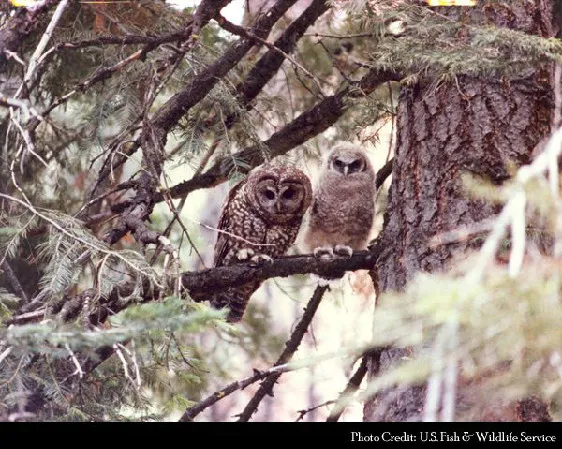
A group in Massachusetts filed the first petiton seeking to protect the northern spotted owl of the Pacific Northwest, followed by a petition filed by a consortium of nearly 30 environmental groups, Brosi told LiveScience. The status of the owl became the subject of long-running and high-profile battle between conservationists and timber interests in the 1980s and 1990s. [Album: Stunning Photos of Owls]
For their study, Brosi and his colleague Eric Biber used Fish and Wildlife Service data on 913 land and freshwater species listed under the act, comparing those championed by citizens versus those whose listing was initiated by government officials.
In addition to finding that citizen-championed species were more biologically threatened and more likely to face conflict with development projects, they found that citizens were more likely to seek protection for lower-profile animals or plants within a population.
Follow LiveScience writer Wynne Parry on Twitter@Wynne_Parry or LiveScience @livescience. We're also on Facebook & Google+.
