














Pumice or Ash? Depth of Volcanic Eruption Determines Fall-Out

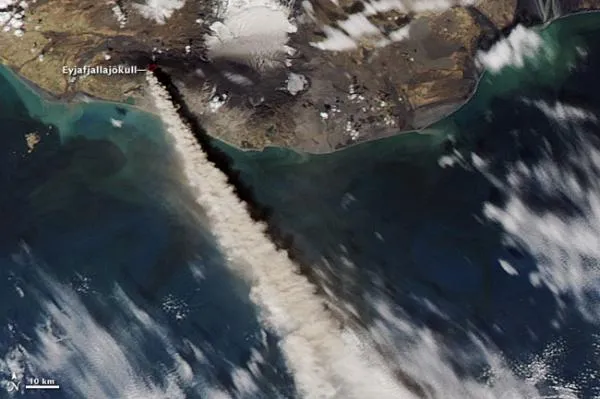
When a volcano erupts explosively, molten rock bubbles upward at the speed of sound, forming glass-like rocks that shoot out of the earth as fast as a speeding bullet (literally).
But not all volcanic eruptions are created equal. The size of the erupting particles helps determine how dangerous the outburst is. A jet of fine-grained ash is more likely to make it into the upper atmosphere, where it can disrupt air traffic and cause short-term cooling by reflecting incoming sunlight back into space. The 1991 eruption of Mount Pinatubo in the Philippines, for example, lofted particles and gases into the stratosphere, where they reflected sunlight and helped reduce global temperatures by about 0.9 degrees Fahrenheit (0.5 degrees Celsius) during the following year.
On the other hand, a payload of large pumice rocks, also known as bombs, is more likely to cause local damage, and form at the same time as a lethal so-called pyroclastic flow of superheated gas and rock.
Scientists had thought that these particles were shaped at the beginning of an eruption, when magma bubbles and forms glass-like tephra. But a new study published in the July 22 edition of the journal Nature Geoscience found that particles are primarily shaped during their swift ride to the surface, during which the rocks ram into each other and break apart.
After deeply-rooted eruptions, particles have more time to crash into one another and break apart, and so are more likely to produce a fine-grained ash, said study author and Georgia Tech researcher Josef Dufek.
Shallow eruptions, on the other hand, are more likely to chuck out pumice bombs, he told OurAmazingPlanet. During field work in Greece, Dufek found basketball-sized chunks of pumice that were thrown 12 miles (20 kilometers) by ancient eruptions.
To find out how much volcanic rocks shatter on their way to the surface, Dufek fired beads of volcanic glass at one another using a "pumice gun" and filmed their collisions with high-speed cameras. After enough collisions, the particles can break each other into a million little pieces, forming fine grains that can rise in a choking plume into the atmosphere.
Get the world’s most fascinating discoveries delivered straight to your inbox.
This kind of eruption can clog jet engines with clouds of tiny, glass-like shards. The 2010 eruptions of Iceland's Eyjafjallajökull volcano, for example, led to the largest closing of air traffic since World War II, and temporarily stranded millions of passengers.
The results of the new study should help volcanologists better understand what's going on beneath volcanoes, and may one day even help predict what sort of eruption to expect from a certain volcano.
"If you live near a volcano, the pyroclastic flow is more dangerous," Dufek said. "If you're far away, your concern is more about the fine-grained ash getting up into the atmosphere."
This article was provided by OurAmazingPlanet, a sister site to LiveScience. Reach Douglas Main at [email protected]. Follow him on Twitter @Douglas_Main. Follow OurAmazingPlanet on Twitter @OAPlanet. We're also on Facebook and Google+.
