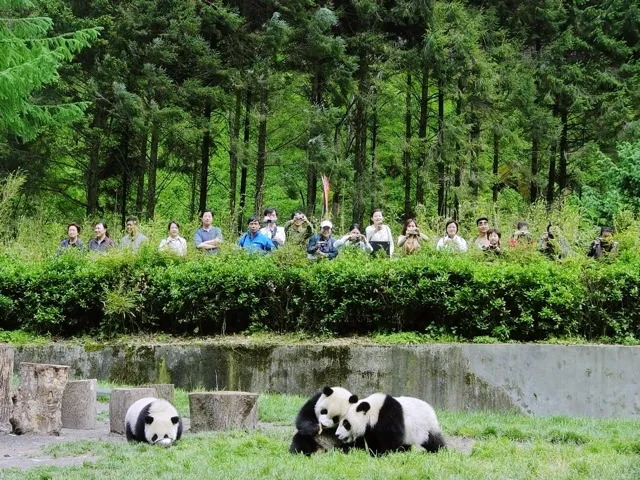
Truly impoverished people are less likely to benefit economically from nature-based tourism than those who already have access to resources, according to research that followed the effects of burgeoning tourism in Wolong, China, where pandas are the main attraction.
The study followed 220 Wolong families from 1999 to 2007 as the area's economic base shifted from agriculture to tourism. Results showed that those who were already educated, economically well off and had relationships with government officials had a much better chance of benefitting from the new industry than other individuals. [Butter Balls: Photos of Playful Pandas]
Those without these resources — the people who are the targets of many Chinese programs to lift people out of poverty —had much more difficulty.
Latest Videos FromLive Science
"The policies haven't yet reached their full potential," said lead researcher Wei Liu, a doctoral candidate in the Center for Systems Integration and Sustainability at Michigan State University. "But now we have the data to show what's happening."
The Center has a 15-year history of work in Wolong.
Tourism in Wolong dropped off abruptly in 2008 with the massive Sichuan earthquake, and damage to roads and buildings in the province still impedes business development.
Like many nature reserves around the world, Wolong Nature Reserve is home to both people and animals. In Wolong's case, the natural inhabitants include several thousand species of plants and animals, including the endangered giant panda.
The research, which was funded by the National Science Foundation, appeared online Wednesday (April 25) in the journal PLoS ONE.
You can follow LiveScience writer Wynne Parry on Twitter @Wynne_Parry. Follow LiveScience for the latest in science news and discoveries on Twitter @livescience and on Facebook.