













Hybrid Vehicles Are Only 'Green' When Lean

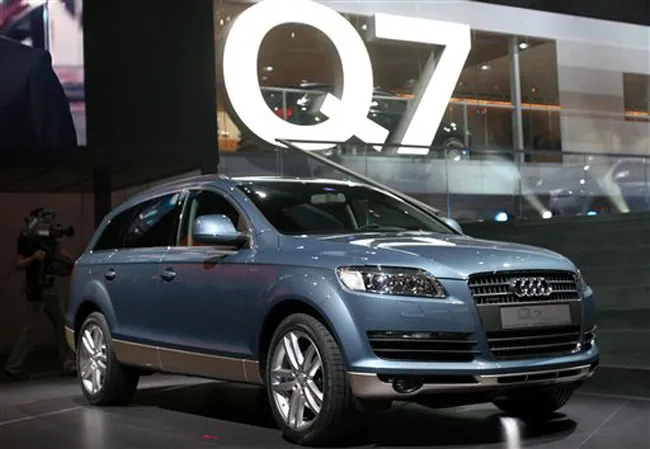
Thanks in part to tax incentives, the hybrid car market is gaining speed. But the full potential of these fuel-saving vehicles is being offset by the fact that 30 percent of hybrids sold in 2006 were SUVs.
"The average hybrid is growing rapidly heavier, more powerful, and as a result the fuel consumption benefits are reduced," said Conor Reynolds of University of British Columbia.
Reynolds and Milind Kandlikar, also from UBC, compiled data from the current automobile market to determine how hybrid fuel efficiency drops as vehicles become bigger. The results, published in the journal Environmental Research Letters, could help shape environmental policies.
A hybrid-electric vehicle (HEV), or hybrid for short, has a conventional internal combustion engine, but it also carries a large battery that assists the engine when extra power is needed and runs the vehicle by itself during idle or low power situations. This means less fuel is needed and, consequently, less of the greenhouse-gas carbon dioxide is emitted.
Hybrids currently account for 2.3 percent of new vehicle sales, according to the consumer research firm J.D. Power and Associates. Market analysts expect 345,000 hybrids will be sold in 2007, a 35 percent increase from 2006.
Carry the weight
Although a heavy hybrid consumes more fuel than a light one, Reynolds and Kandlikar were surprised to find that hybrids carry additional weight more efficiently than internal combustion engine vehicles (ICEV).
Get the world’s most fascinating discoveries delivered straight to your inbox.
Specifically, when normal ICEVs scale up 1,000 pounds in size, they require on average an extra 1.3 gallons of gas to go 100 miles. For HEVs, the same weight gain would correspond to an extra 0.7 gallons per 100 miles.
Reynolds believes this difference stems from the fact that hybrids often have regenerative braking, which recharges the battery when the brakes are applied. In this way, hybrids recover energy that typically is wasted.
Still, in the final analysis, "most small [ICEV] cars have better fuel consumption than most hybrid SUVs," Reynolds told LiveScience.
As an example, a 2007 Toyota Prius (HEV) gets on average 46 miles per gallon (mpg), according to an Environmental Protection Agency website, while a similar-sized 2007 Toyota Corolla (ICEV) gets 29 mpg. When you move up to an SUV, the 4WD Toyota Highlander (HEV) gets 26 mpg.
So the environmentally-conscious car buyer might do better buying a smaller traditional vehicle than a hybrid SUV.
Policy implications
Reynolds thinks the new weight scaling results could help determine the best way to encourage more fuel efficient vehicle sales.
"It might be decided that tax breaks should be given to any vehicle that has demonstrated environmental benefits, and not only to hybrid SUVs or hybrid luxury cars," Reynolds said.
Currently, U.S. tax payers can get credit for purchasing a hybrid vehicle no matter what size it is, as long as the automaker has not passed a certain quota of sales.
Trucks and SUVs comprise roughly 50 percent of new vehicle sales in North America. The tricky question for policy makers is whether these big automobile buyers might be more enticed to "go hybrid" or "go smaller."
Or even do both.
"If SUV/truck drivers switched to a hybrid-electric vehicle that was also lighter and less powerful than their previous vehicle, the fuel consumption benefits would be even greater," Reynolds said.
- Top 10 Emerging Environmental Technologies
- QUIZ: What's You Environmental Footprint
- Tipping Point: Half of America Wants a Hybrid Car
