













Simple, Printable Solar Panels Envisioned
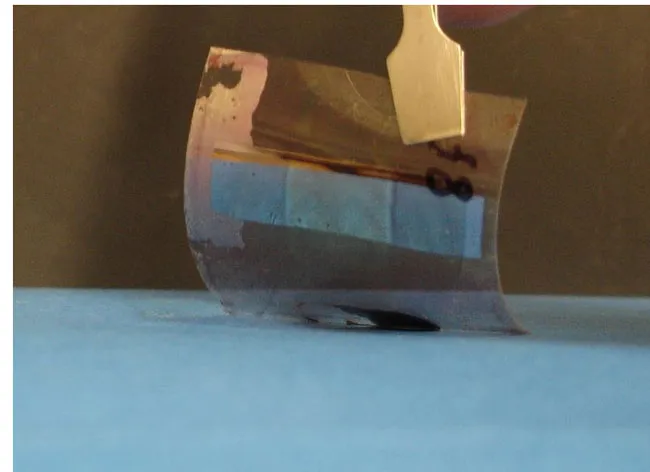
Someday, homeowners might need only inkjet printers to harvest solar energy. Scientists at the New Jersey Institute of Technology have developed a quick and simple method for do-it-yourselfers to power their homes with inexpensive solar cells that can be printed on certain computer printers or painted on plastic sheets. Consumers can then stick the instant solar panel on a wall, roof or billboard in order to soak up energy supplied by the sun's rays. The new polymer-based technology is detailed in the June 21 issue of the Journal of Materials Chemistry. Although renewable energy is widely available, finding affordable ways to take advantage of these resources has been a major challenge. Windmills or dams that generate hydroelectric power are elaborate projects. And purified silicon, a core material for making conventional solar cells, is too expensive to produce on a consumer level. "Developing organic solar cells from polymers, however, is a cheap and potentially simpler alternative," said lead researcher Somenath Mitra. "Imagine some day driving in your hybrid car with a solar panel painted on the roof, which is producing electricity to drive the engine. The opportunities are endless." The "paintable" solar-cell coating developed at NJIT is made of carbon nanotubes that function like electric wires but are about 50,000 times smaller than a strand of hair. Yet, just one nanotube can conduct current better than typical electrical wiring. "Actually, nanotubes are significantly better conductors than copper," Mitra added. Mitra and his research partner, Cheng Li, also at NJIT, encased the carbon nanotubes in "fullerenes," protective compounds that can trap electricity and keep it from escaping. Then, sunlight can activate a process in which the nanotubes, behaving like copper wires, will run the converted electrical current to power household appliances like your microwave. "Using this unique combination in an organic solar-cell recipe can enhance the efficiency of future painted-on solar cells," said Mitra. "Someday, I hope to see this process become an inexpensive energy alternative for households around the world."
Get the world’s most fascinating discoveries delivered straight to your inbox.