














Can Eating Too Much Spicy Food Kill You?
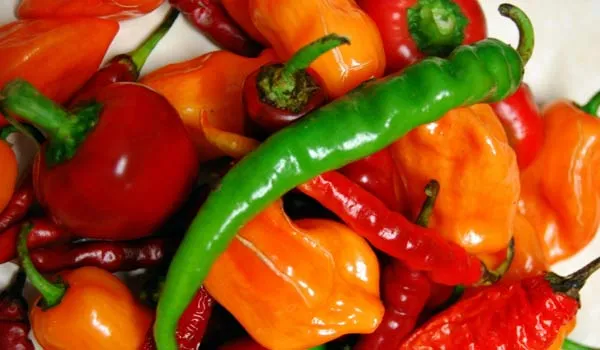
In a contest that matches humans against some of the world's hottest chili peppers, no one wins. Last week, restaurant in Edinburgh, Scotland, held a competition to eat the extra-hot Kismot Killer curry. Some of the competitive eaters were left writhing on the floor in agony, vomiting and fainting.
According to reports, two British Red Cross workers overseeing the event at the Kismot Indian restaurant in Edinburgh but became overwhelmed by the number of casualties and ambulances were called. Half of the 20 people who took part in the challenge dropped out after witnessing the first diners vomiting, collapsing, sweating and panting.
So what exactly are the health impacts of eating really hot chili peppers? Can eating too much of the spicy stuff kill you?
To answer this question, Life's Little Mysteries turned to one of the experts: Paul Bosland, professor of horticulture at New Mexico State University and director of the Chile Pepper Institute, was responsible for finding the world's hottest chili pepper, the Bhut Jolokia.
Bosland says that chili peppers (or as some call them, chile peppers) can indeed cause death — but most people's bodies would falter long before they reached that point. "Theoretically, one could eat enough really hot chiles to kill you," he says. "A research study in 1980 calculated that three pounds of extreme chilies in powder form — of something like the Bhut Jolokia — eaten all at once could kill a 150-pound person."
This scenario wouldn't likely have a chance to play out. "However, one's body would react sooner and not allow it to happen," Bosland said. "One would have to eat it all in one sitting," he says. Taken over the course of a year, those three pounds of chilies wouldn't be harmful.
Chili peppers cause the eater's insides to rev up, which can come with some problems. They activate sympathetic nervous system — which helps control most of the body's internal organs — to expend more energy, so the body burns more calories when the same food is eaten with chili peppers. "Eating chili is associated with increases in metabolic rate and thermogenesis," says John Prescott, a professor at Sussex University and editor of the journal Food Quality and Preference. "Capsaicin, the active ingredient in chili, does cause tissue inflammation so the mucosa of the stomach or intestines might be damaged by a sufficiently large dose."
Get the world’s most fascinating discoveries delivered straight to your inbox.
Tissue inflammation could explain why the contestants in the Killer Curry contest said they felt like chainsaws were ripping through their insides. Too much of the spicy stuff can also give you a good case of heartburn.
When it comes to spicy, enough of the hot stuff can cause damage — so eat carefully out there!
This story was provided by Life's Little Mysteries, a sister site to LiveScience. You can follow Katharine Gammon on Twitter @kategammon. Follow Life's Little Mysteries on Twitter @llmysteries, then join us on Facebook.