













City Cyclists Breathe In More Black Soot
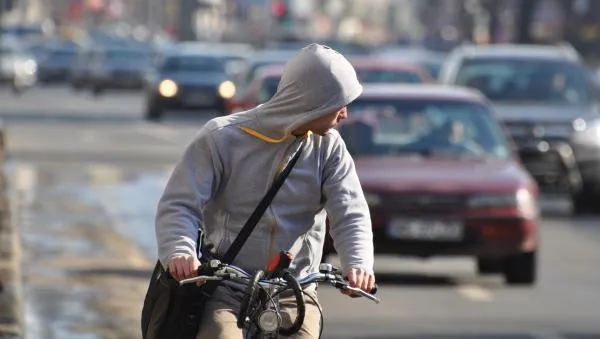
Biking to work is usually seen as a healthy choice, but a new study shows that it may have a downside. City dwellers who cycle to work had higher levels of black carbon in their lungs.
Created by the combustion of fossil fuels, black carbon is present in car exhaust fumes. Pedestrians breathe in these miniscule particles of soot, but bikers inhale even more because they are closer to the fumes and take deeper breaths, according to the study.
Previous research has shown that black carbon is associated with a wide range of health effects, including reduced lung function and a higher risk of respiratory diseases andheart attacks.
Researchers from the University of London collected lung cell samples from 10 urban commuters — five who walked to work and five who cycled. All the participants were healthy nonsmokers between the ages of 18 and 40.
The lung tissue sampled was from the lower part of the airway, and included cells called airway macrophages. These specialized cells are situated on the airway surface and ingest foreign material.
The researchers found that the cyclists had 2.3 times more black carbon in their lungs than pedestrians.
"This could be due to a number of factors, including the fact that cyclists breathe more deeply and at a quicker rate than pedestrians while in closer proximity to exhaust fumes, which could increase the number of airborne particles penetrating the lungs," study researcher Chinedu Nwokoro said in a statement.
Get the world’s most fascinating discoveries delivered straight to your inbox.
"Our data strongly suggest that personal exposure to black carbon should be considered when planning cycling routes," Nwokoro said. "Whether cycling by healthy individuals is in itself associated with adverse health effects is currently being assessed in a larger ongoing study."
The study was presented at the European Respiratory Society's Annual Congress in Amsterdam on Sunday (Sept. 25).
Pass it on: Cyclists in major cities may have higher levels of black carbon in their lungs than pedestrians; cyclists should consider routes that minimize their exposure.
Follow Remy Melina on Twitter @remymelina, and follow MyHealthNewsDaily @MyHealth_MHND. Like us on Facebook.