













Secret of Cold War Spy Messages Revealed

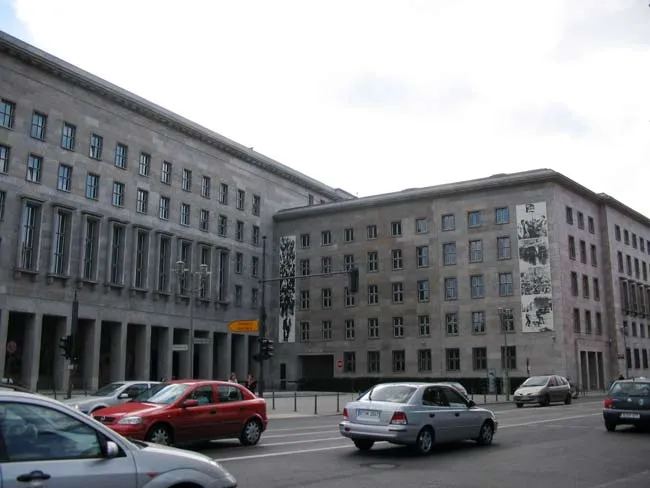
The invisible ink formula used by East German secret police to pass messages during the Cold War has remained classified, until now.
More than fifteen years since the fall of the Berlin Wall and the reunification of East and West Germany, a group of scientists believe they've finally cracked the well-guarded chemical code.
"This is a first, since spy agencies' secret writing formulas and methods are super-secret and never made public," said Kristie Macrakis, a historian of science at Michigan State University and co-leader of the project.
No chances
The Stasi, a feared and highly covert police force modeled after the KGB, communicated top-secret messages with invisible ink during the height of the Cold War, when communism ruled East Germany and eastern Berlin.
Agents traced notes onto a piece of paper through a film infused with a chemical solution, much like carbon paper. The writing was revealed by the reader using another special mixture, the scientists explained this week.
But few agents even within the Stasi organization ever knew the complete formula for either sending or receiving, Macrakis said, because "someone might defect and spill the beans to the other side."
Get the world’s most fascinating discoveries delivered straight to your inbox.
Declassified documents
The Stasi's confidential archives were declassified after communism collapsed and the Berlin Wall came down in 1989, but did not include full instructions on how to replicate the invisible ink procedure. Much of it was blacked out.
Macrakis and her team, which included MSU chemist Ryan Sweeder, used trial and error to decipher the formula.
"There is a chemical reaction written in the file, but it is incomplete," Macrakis told LiveScience. "We experimented with different quantities of solution. It turned out the pH was crucial and that was covered up by the secrecy strip."
Air of secrecy
A Spy Lab has since been set up on MSU's campus. There, chemistry students work out the Stasi formula for themselves as counter-intelligence agents trying to thwart a terrorist attack. While manipulating the chemical reaction is the students' main focus, the popularity of the program is helped by the extra history lesson they get about communist Germany, Macrakis said.
Despite the years that have passed since the end of the Cold War, Germany's secret police force and its tactics are still shrouded in mystery, Macrakis said. Efforts to get information from German scientists and include them in the project were unsuccessful.
"I tried contacting a couple of scientists but never got an answer. Some of them had disappeared," she said. "Many of them still stick to a strict secrecy oath."
