













Survival Smarts: Healthy Lobsters Shun the Sick
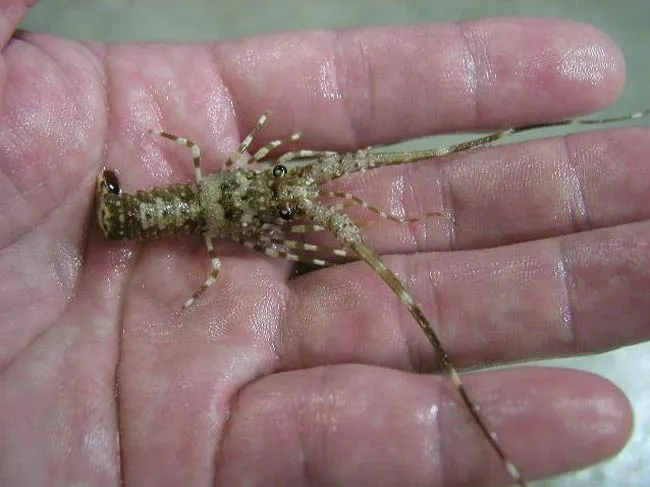
Caribbean spiny lobsters are normally gregarious creatures, enjoying the company of living together in underwater caves.
But friendships are quickly severed if a lobster starts to smell like it's infected with a lethal disease.
Even before an infected lobster starts showing symptoms, its mates pick up on the infection and avoid the sick one like, well, the plague, forcing it into a solitary existence.
While the cold shoulder might sound harsh, it's an extremely effective means of maintaining low incidence of the disease in the wild, researchers write in a new study published in the May 25 issue of the journal Nature.
Deadly disease
The lethal virus, called PaV1, was first noticed by Donald Behringer, a graduate student at Old Dominion University. He was drawing blood from lobsters. Some, he noticed, had milk-colored blood instead of the normal, healthy clear stuff. PaV1 infects juvenile spiny lobsters and is transmitted mainly by physical contact. Seawater can spread the disease among the smallest creatures.
During subsequent field studies, the researchers found that 93 percent of infected lobsters lived on their own.
Get the world’s most fascinating discoveries delivered straight to your inbox.
Unsure whether what they were seeing was an intentional split, the researchers brought lobsters into their laboratory and gave them the option of entering dens containing either healthy or diseased lobsters. While the sick lobsters did not discriminate, healthy lobsters shunned the sick.
"This is the first record of healthy animals avoiding diseased members of their own species in the wild," said study co-author Jeff Shields of the Virginia Institute of Marine Science.
Cruel but effective
The behavior helps curb spread of the disease in the wild, the study found. In the lab, when healthy lobsters are placed with infected ones, they too become infected and 60 percent die within 80 days.
In populations off the coast of Florida, however, the rate of infection is just 7 percent.
The ability of healthy lobsters to determine that their neighbors are infected, but not yet infectious, provides an important evolutionary advantage, Shield said. Lobsters that possess this trait, and are successful at avoiding the sick, are more likely to survive, breed, and pass on the trait to their offspring.