













Egypt Threatens Removal of Ancient Central Park Obelisk
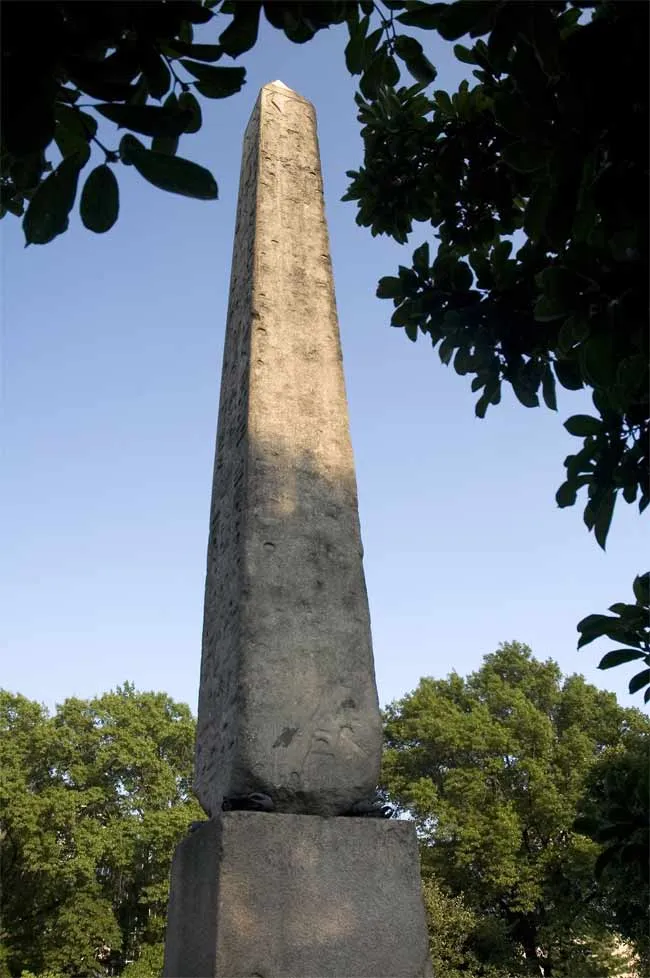
Since 1881, the obelisk known as Cleopatra's Needle has stood in New York's Central Park, but a letter from the secretary general of Egypt's Supreme Council of Antiquities indicates that this may change if the monument is not taken better care of.
Recently, Zahi Hawass, the aforementioned secretary general and archaeologist, wrote to the Central Park Conservancy and New York City Mayor Michael Bloomberg to inform them that if steps are not taken to protect the obelisk, it would be removed.
"I am glad that this monument has become such an integral part of New York City, but I am dismayed at the lack of care and attention that it has been given," Hawass wrote. "Recent photographs that I have received show the severe damage that has been done to the obelisk, particularly to the hieroglyphic text, which in places has been completely worn away. I have a duty to protect all Egyptian monuments whether they are inside or outside of Egypt. If the Central Park Conservancy and the City of New York cannot properly care for this obelisk, I will take the necessary steps to bring this precious artifact home and save it from ruin."
The obelisk was originally one of a pair – the other currently resides in London – built around 1500 B.C. to honor Pharaoh Thutmose III. They were placed in the ancient city Heliopolis in Egypt, where they sat for a little over 1,500 years until 18 A.D., when they were taken by the Romans and placed at the entrance of the Ceasarium in Alexandria, according to TravellersinEgypt.com, a website that compiles information from people who have traveled in Egypt.
In 1869, to commemorate the opening of the Suez Canal, the Khedive of Egypt, Ismail Pasha, gave the United States the obelisk that now sits in Central Park. The gift was an attempt to cultivate trade relations between the two countries, according to the Central Park Conservancy. It would still take another decade for the obelisk to reach the park.
U.S. Navy Lieutenant-Commander Henry H. Gorringe was charged with the task of transporting the 71-foot (21 meter), 224-ton obelisk from Alexandria to New York City. The project was funded by William H. Vanderbilt, at the cost of $102,576, according to TravellersinEgypt.com. When the obelisk finally reached the shores of the Hudson, there were still 112 days left in its journey to its current location.
Gorringe had to build a track to transport the obelisk on land to Central Park (the obelisk moved about 100 feet per day across 96th Street to Broadway, south to 86th St., and east toward the park), then raise the monument into its assigned location, according to Archaeology Magazine. The obelisk was erected in January 1881 in Central Park; nearly two-and-a-half years after Gorringe first set sail for Alexandria.
Get the world’s most fascinating discoveries delivered straight to your inbox.
Hawass finished his letter, which is posted on his blog, by writing "I strongly urge you to focus your efforts on saving this obelisk and preserving it for future generations. I am confident that you can find the resources in New York City to conserve this monument properly and pay this treasure the respect that it deserves. I eagerly await your prompt reply."
When asked about Hawass' concern that the obelisk wasn't being well taken care of, Vickie Carp, director of public affairs for the New York City Department of Parks and Recreation told LiveScience, "that's not true."
A statement from Jonathan Kuhn, director of Art and Antiquities for the NYC Department of Parks & Recreation states: "We have been working in recent years with the Metropolitan Museum and the Central Park Conservancy to further analyze the condition of the obelisk and monitor its condition. There is no evidence at this point of any significant ongoing erosion."