













Jupiter Didn't Ignite, Despite Reports of a 2nd Sun

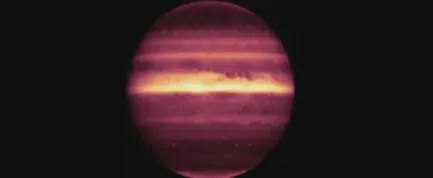
There are reports circulating the Internet that Jupiter has ignited to create a second sun in our solar system, with videos to prove it (headlines read "Jupiter Ignites!" and "NASA proofs").
Unfortunately (or fortunately, depending on your fondness for Jupiter and for hoaxes) it isn't true.
A combination of imaging artifacts on NASA's STEREO spacecraft, along with a solar flare that crossed the field of view in front of Jupiter, did indeed make a vivid impression, explains NASA astrophysicist Alex Antunes on his blog. But Jupiter is still out there, orbiting our sun as a comparatively mundane gas giant planet. (Side note: STEREO is searching for remains of a "lost planet" theorized, for real, to have crashed into Earth a few billion years ago to create the moon.)
(For more on the latest regarding a real hypothesis for a possible 2nd sun, see this 2001 article. I'm not aware of any evidence adding further credence to the idea since then.)
Hoaxes on the Web, be they intended as such or not, are nothing new. (A recent favorite: The Jersey guys who lofted balloons with flares into the night sky to create an alien scare; they got busted by their own videos and ordered to pay a $250 fine.) But with YouTube and the ability to manipulate raw data and video footage, or to append whatever wild theories to one wishes, expect more of this sort of thing.
Oh, and while we're at it, did you know the world will end in 2012?
[Read the Full Story at ScientificBlogging]
Get the world’s most fascinating discoveries delivered straight to your inbox.
In our new Etc. format, LiveScience provides links to articles of interest around the web. It is in Beta.
Video that started the stir:

Robert is an independent health and science journalist and writer based in Phoenix, Arizona. He is a former editor-in-chief of Live Science with over 20 years of experience as a reporter and editor. He has worked on websites such as Space.com and Tom's Guide, and is a contributor on Medium, covering how we age and how to optimize the mind and body through time. He has a journalism degree from Humboldt State University in California.