

-
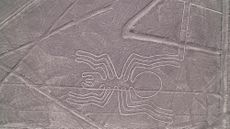 Why were the Nazca Lines built?
Life's Little Mysteries The Nazca Lines are sprawling geoglyphs that were constructed on Peru's ground and hillsides around 2,000 years ago. But why were they built?
2 CommentsLife's Little Mysteries -
 Why are there so many marsupials in Australia?
Life's Little Mysteries Australia is home to hundreds of marsupials, including koalas, kangaroos and wombats. But how did these marsupials get to Australia?
Life's Little Mysteries -
 Can cuttlefish hypnotize their prey?
Life's Little Mysteries Cuttlefish use rapid color-change while hunting. The question is, does it actually hypnotize their prey?
Life's Little Mysteries -
 Has there ever been a mountain taller than Everest?
Life's Little Mysteries Mount Everest may be the king of the planet today, but has Earth ever thrust a larger mountain from its surface?
Life's Little Mysteries -
 How did Roman aqueducts get water to go uphill?
Life's Little Mysteries Roman aqueducts used gravity to transport water. So how did they get it to go uphill?
Life's Little Mysteries -
 Does written language speed up or slow down cultural change?
Life's Little Mysteries The written word has been revolutionary in preserving ideas from the past, and transmitting new ones in the present. But does it favor tradition or change?
Life's Little Mysteries -
 Do animals experience schadenfreude?
Life's Little Mysteries Schadenfreude, or pleasure at seeing another's pain, is a complex emotion. So can animals besides humans experience it?
3 CommentsLife's Little Mysteries -
 Could we ever create artificial gravity on a spaceship?
Life's Little Mysteries Microgravity poses severe health risks for astronauts. But could there be a solution?
5 CommentsLife's Little Mysteries -
 What is the closest any object has gotten to the sun?
Life's Little Mysteries Approaching the sun is a perilous process, but many objects have successfully pulled off this feat.
Life's Little Mysteries


