













Pregnant Male Fish Can Choose Abortion

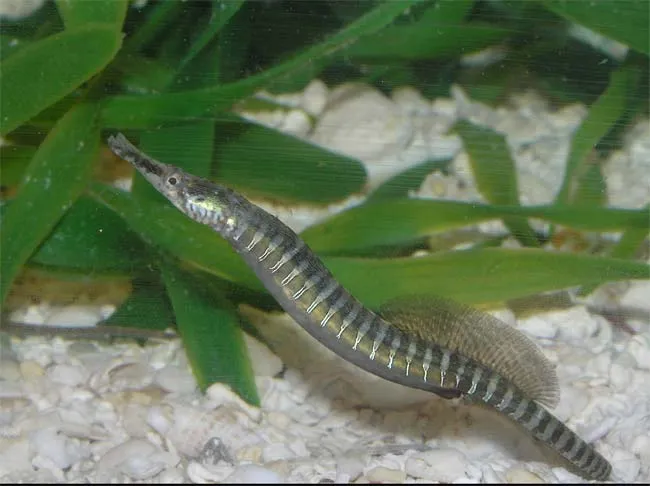
Male gulf pipefishes – one of the only species whose males can become pregnant – can selectively abort embryos from less attractive females, new research finds.
To create baby pipefishes (which are similar to seahorses), females deposit eggs into sacs called brood pouches on the males. Males then fertilize the eggs (between five and 40 per brood), and incubate them for about 14 days until they hatch, feeding them oxygen and nutrition through the pouch.
It turns out male pipefishes can choose to invest certain resources in incubating their young that give some broods a better chance of survival than others.
"This experiment is really exciting, I think, because before we thought the brood pouch was just this nurturing structure, but this shows us that really the males are being much smarter than that, they're taking this particular approach toward investing their resources wisely," said study leader Kimberley Paczolt of Texas A&M University in College Station, Texas. "This tells us that the brood pouch is a much more dynamic structure than we previously expected."
The researchers found a correlation between attractive mothers (for pipefish, bigger equals more attractive), and offspring that were more likely to hatch. They also found that when a male has two pregnancies in a row, if the first one results in a high birth rate, the embryos in the second pregnancy are less likely to be born.
"That's what shows us that the male is investing some resource, that once it's used, it's gone," Paczolt told LiveScience.
Paczolt and co-researcher Adam Jones, also of Texas A&M University, reported their findings in the March 18 issue of the journal Nature.
Get the world’s most fascinating discoveries delivered straight to your inbox.
For all members of the Syngnathidae family, which includes pipefish, seahorses and sea dragons, male pregnancy is ubiquitous.
"We can't completely explain why male pregnancy evolved," Paczolt said. "There are some benefits to it that we know. We know that male pipefish are guaranteed to have paternity over eggs they're carrying."
But there are still many unanswered questions about male pregnancy and the complex factors that affect birth outcome, she said.
"The pipefish brood pouch may serve several functions," Anders Berglund of Uppsala University in Sweden wrote in an accompanying essay in the same issue of Nature. "It provides safety and nutrition for offspring, and it may serve as an attractant signal for females. But also, as is evident from Paczolt and Jones’s study, it grants fathers better control over reproduction."
Berglund was not involved in the research.
