 Live Science Plus





You are now subscribed
Your newsletter sign-up was successful
Want to add more newsletters?

Delivered Daily
Daily Newsletter
Sign up for the latest discoveries, groundbreaking research and fascinating breakthroughs that impact you and the wider world direct to your inbox.

Once a week
Life's Little Mysteries
Feed your curiosity with an exclusive mystery every week, solved with science and delivered direct to your inbox before it's seen anywhere else.

Once a week
How It Works
Sign up to our free science & technology newsletter for your weekly fix of fascinating articles, quick quizzes, amazing images, and more

Delivered daily
Space.com Newsletter
Breaking space news, the latest updates on rocket launches, skywatching events and more!

Once a month
Watch This Space
Sign up to our monthly entertainment newsletter to keep up with all our coverage of the latest sci-fi and space movies, tv shows, games and books.

Once a week
Night Sky This Week
Discover this week's must-see night sky events, moon phases, and stunning astrophotos. Sign up for our skywatching newsletter and explore the universe with us!
Join the club
Get full access to premium articles, exclusive features and a growing list of member rewards.
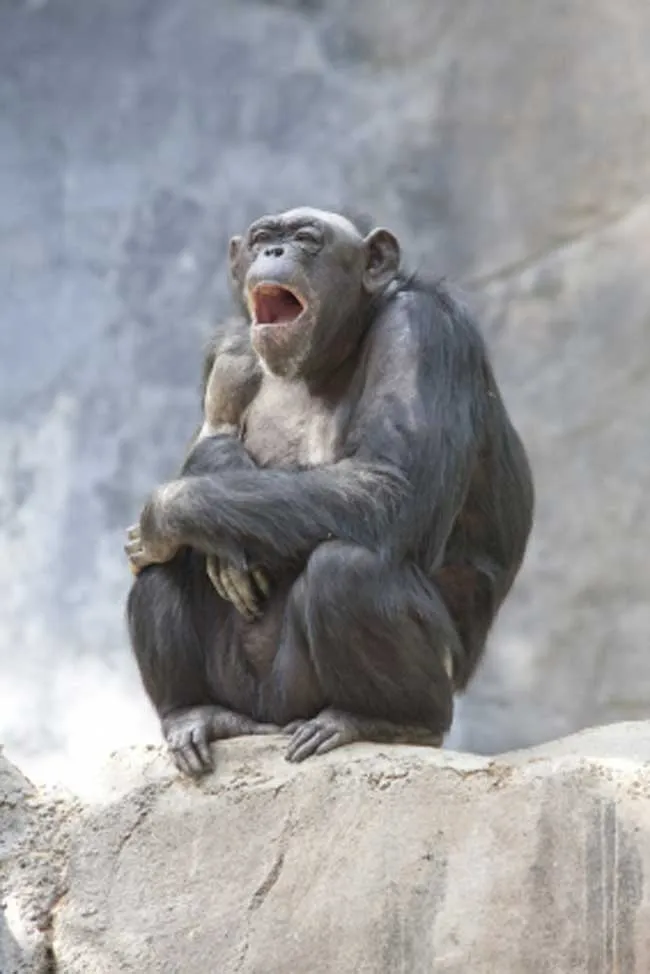
Mother Nature offers up a cacophony of diverse sounds. But after examining the calls of hundreds of species from cricket chirps to chimp hoots, scientists have found they aren't so different from one another.
Their research on the calls made by nearly 500 animal species has led to simple mathematical models that can predict an animal's sounds based on the rate at which that individual takes up and uses energy.
"Our results indicate that, for all species, basic features of acoustic communication are primarily controlled by individual metabolism, which in turn varies predictably with body size and temperature," said James Gillooly, a biologist at the University of Florida Genetics Institute. "So, when the calls are adjusted for an animal's size and temperature, they even sound alike."
Their analyses included species of insects, fishes, reptiles, amphibians, birds and mammals.
"This seems to provide unifying principles for acoustic communication that can be applied to virtually all species. In terms of producing sounds, we use vocal cords, but other mechanisms of sound production exist, such as insects that rub their legs together," said study researcher Alexander Ophir, a zoologist at Oklahoma State. "Until now, these sounds have been treated differently. But by providing a general mathematical framework — a baseline — we have a reference point to compare those differences."
Ophir added, "So if we say one animal's call is loud, we can provide a predictive reference point to say whether it is truly loud when compared with other animal sounds."
The finding, reported in today's Proceedings of the Royal Society B, will help scientists understand how acoustic communication evolved across species, and could also help to predict what dinosaurs and other extinct animals may have sounded like compared with other animals when alive.
"These findings say if you give me information about an animal of a certain body size and the mechanisms it uses to make sounds, I can give you a rough idea of what it sounds like," said Jeffrey Podos, a biologist at the University of Massachusetts Amherst, who did not participate in the study.
- 10 Animals That Use Tools
- 10 Things You Didn't Know about Animals
- Amazing Animal Abilities

