

Chewed-Up Wood

Woodcut with Wormholes
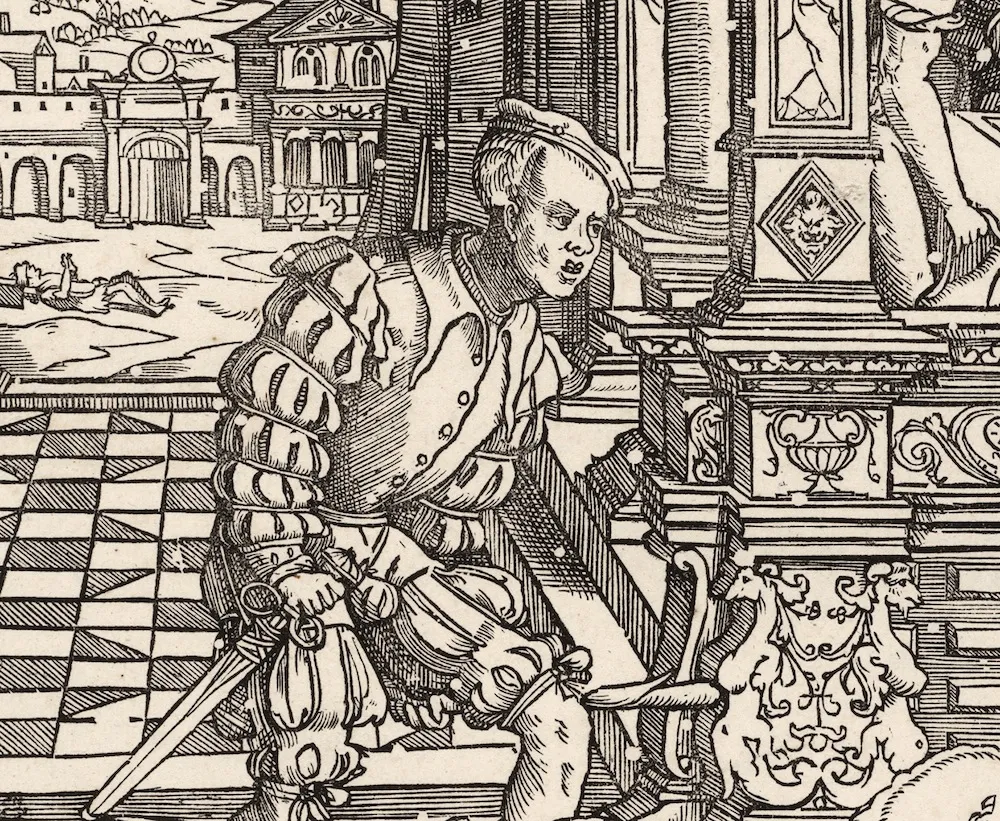
The 1541 woodcut "De Rijke Man" (The Rich Man) by Cornelius Anthonisz. White circles reveal where furniture beetles gnawed through the wood block before printing.
Visible Wormholes

By tracking wormholes such as the ones that appear on this print of "The Rich Man," Pennsylvania Statue University biologist Blair Hedges was able to determine where different species lived at the time.
Common furniture beetle

Anobium punctatum, the common furniture beetle, is responsible for wormholes in woodcuts from northern Europe.
Furniture Beetles

This diagram shows how furniture beetles bore through dry wood. Larvae hatch and crawl out of the wood in their adult forms.
Beetle Map

This map shows the medieval distribution of the common furniture beetle (northern Europe, in blue) and the Mediterranean furniture beetle (southern Europe, in red). Today, the beetles coexist across western Europe.
Woodcutter at Work

This woodcut depicts a carver creating a woodblock for use in printing. Most first-edition books show little evidence of beetle damage, but later editions often show holes as beetles move in and infest the stored blocks.
Chinese Wood Print

In Asia, the art of woodcut printing began even earlier than in Europe. This colorful print of Buhddha was made in the 10th Century in Shanxi, China.

