













In Photos: Glowing Seafloor Creatures of the Caribbean

Glowing Eyes

The giant deep-sea isopod (Bathynomus giganteus) can grow to a whopping 16 inches (41 centimeters) and sports magnificent compound eyes. Here, light reflects off the eyes' so-called tapetum, a reflective tissue behind the retina.
Glowing Spew

The researchers found two shrimp species that spew bioluminescence as a way to escape predators. Here, in a lab image, a caridean shrimp, Parapandalus species, enveloped in bioluminescent spew emitted during an escape response.
UV Vision

The deep-sea squat lobster/crab called Eumunida picta was found to have a UV-sensitive visual pigment, which would allow the organism to see UV light. Since no UV light from the sun can penetrate to the depths where these creatures live, they must be adapted to seeing bioluminescence, the researchers said.
Caribbean Crab

Another squat lobster, Gastroptychus spinifer, is equipped with both UV-sensitive and blue-sensitive visual pigments. Shown here, the squat lobster/crab surrounded by brittle stars, which are also called Ophiuroids – a large group of echinoderms that includes the brittle stars and basket stars.
UV Vision in Crab
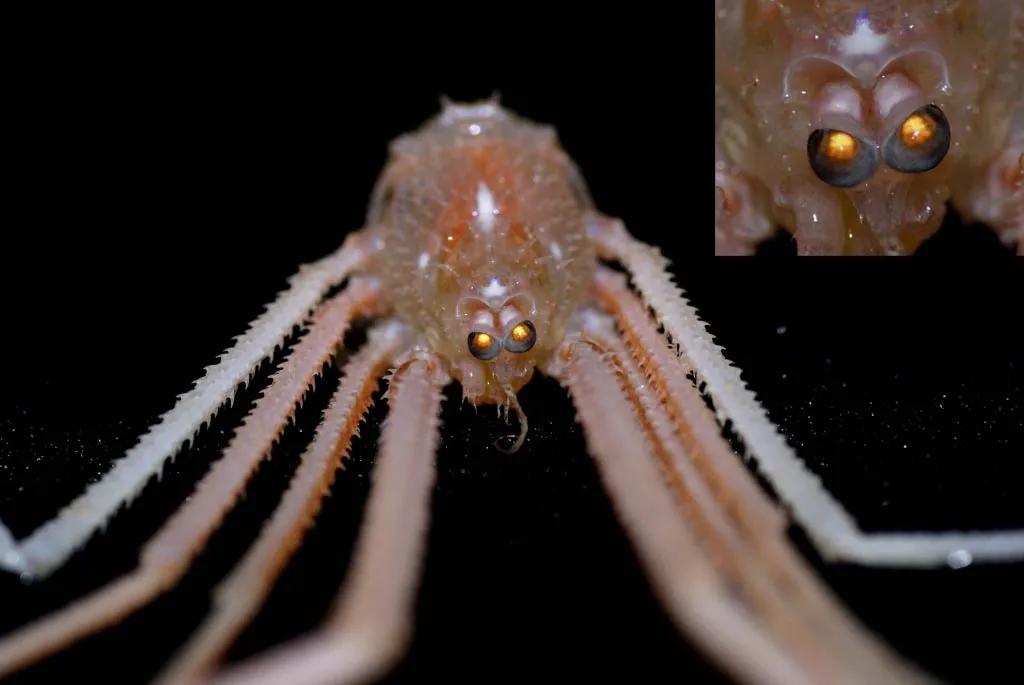
Gastroptychus spinifer (squat lobster) has a body that is about 1/2-inch wide and 1-inch long. Its eyes are quite large for such a small animal.
Leggy Crab

The squat lobster G. spinifer on the coral Gerardia.
Glowing Anemone

Sea-anemone-glowing.jpg: Bioluminescent mucus secreted from the venus fly trap anemone (Actinoscyphia sp.).
Get the world’s most fascinating discoveries delivered straight to your inbox.
Bioluminescent Brittle Star

Bioluminescence of the ophiuroid Ophiochiton ternispinus, a species of brittle star, found at a depth of 3,000 feet.
Bamboo Coral

Glowing bamboo coral (Isidella sp.) found on the Caribbean seafloor.
Glowing Plankton

Picture of the bioluminescence of the deep-sea zoanthid Gerardia, along with the bioluminescence of an unknown planktonic animal (as shot from the submersible). Notice how the planktonic light is bluer.
Glowing Shrimp
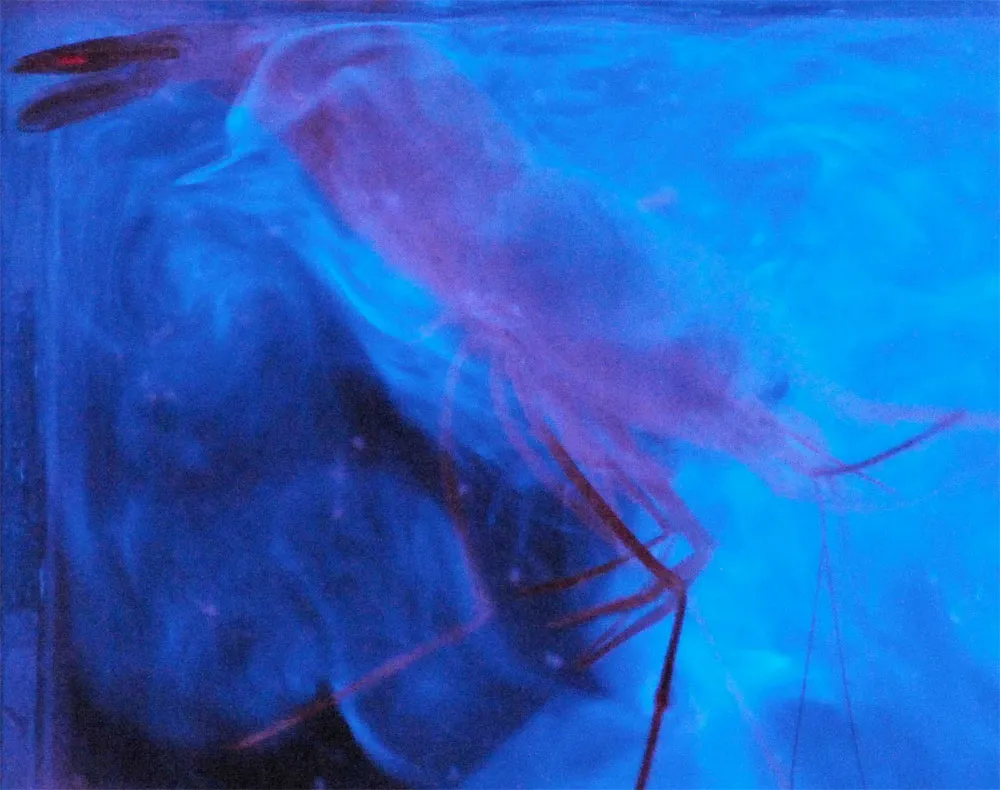
This caridean shrimp (Parapandalus sp.) spews light as a defense mechanism.
