Live Science Plus


You are now subscribed
Your newsletter sign-up was successful
Want to add more newsletters?

Delivered Daily
Daily Newsletter
Sign up for the latest discoveries, groundbreaking research and fascinating breakthroughs that impact you and the wider world direct to your inbox.

Once a week
Life's Little Mysteries
Feed your curiosity with an exclusive mystery every week, solved with science and delivered direct to your inbox before it's seen anywhere else.

Once a week
How It Works
Sign up to our free science & technology newsletter for your weekly fix of fascinating articles, quick quizzes, amazing images, and more

Delivered daily
Space.com Newsletter
Breaking space news, the latest updates on rocket launches, skywatching events and more!

Once a month
Watch This Space
Sign up to our monthly entertainment newsletter to keep up with all our coverage of the latest sci-fi and space movies, tv shows, games and books.

Once a week
Night Sky This Week
Discover this week's must-see night sky events, moon phases, and stunning astrophotos. Sign up for our skywatching newsletter and explore the universe with us!
Join the club
Get full access to premium articles, exclusive features and a growing list of member rewards.
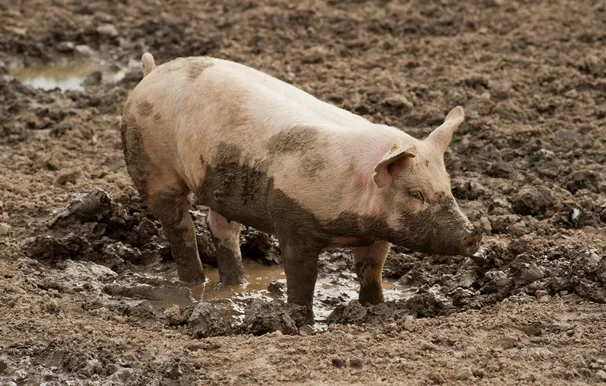
An intestinal parasite that causes diarrhea in humans also makes its home in pigs.
The existence of the single-celled parasite, Dientamoeba fragilis, in pigs is important, the researchers explain, because it might mean pig feces are one way the parasite has been spreading to humans. More than a billion pigs are housed in farms across the world.
Few animal hosts, or "reservoirs," for D. fragilis had been discovered, researchers reported today (April 11) in the journal Emerging Infectious Diseases published by the Centers for Disease Control and Prevention. Pigs in Italy, however, were reported as having high infection rates. So Italian scientists collected and analyzed 152 fecal samples from nine farms. They found that 52 of 74 piglets, 11 of 14 pigs at the "fattening" stage. and eight of 64 sows tested positive for D. fragilis. Young animals appeared to be most susceptible.
Furthermore, the analysis showed that the parasite found in pigs was the same one that infects humans. That means pigs could transmit the parasite to humans, likely through their waste.
The researchers noted that the discovery could be a boon to understanding D. fragilis. Little is known about the parasite's life cycle, and pigs could provide a useful model for understanding how transmission and infection occurs, the researchers said.
You can follow LiveScience senior writer Stephanie Pappas on Twitter @sipappas. Follow LiveScience for the latest in science news and discoveries on Twitter @livescience and on Facebook.