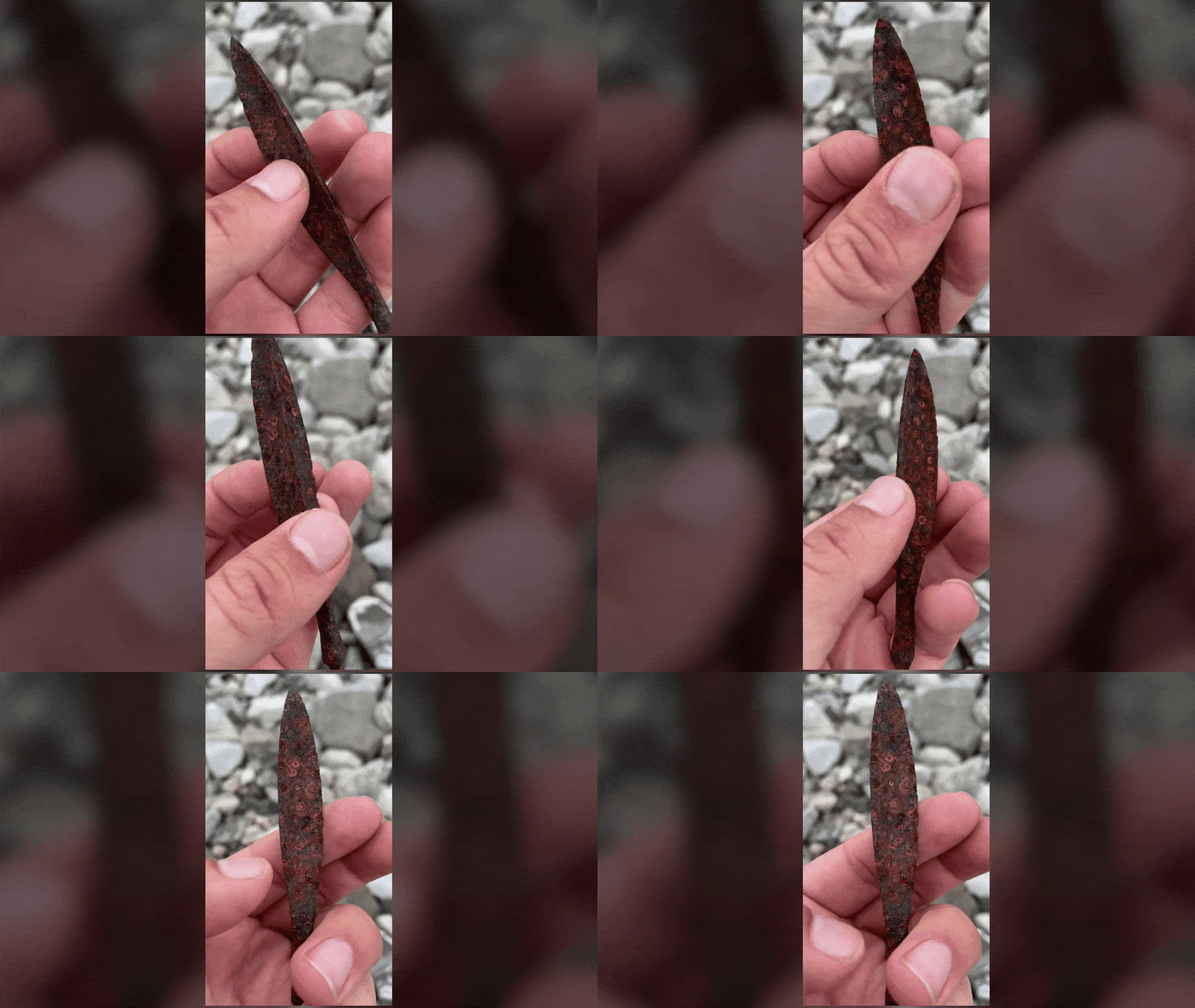
A melting ice patch in the mountains of Norway has revealed an archaeological surprise: a rare, three-bladed arrowhead used by Vikings more than a millennium ago.
The researchers unearthed the metal weapon while surveying a new site in the Jotunheimen Mountains, a millennium-old Viking hotspot for reindeer hunting located high above the treeline and punctuated by ice and stone. The team, which included archaeologists from the Museum of Cultural History in Oslo and Secrets of the Ice, an archaeological group based in Innlandet County, Norway, shared the findings a day later via an Aug. 25 Facebook post.
"Oh, look at this little beauty," they wrote in the post. "The last person who touched it was a Viking."
The 4-inch-long (10 centimeters) iron arrowhead came as a surprise and marked the first time the team had found such weaponry buried in this region of the country.
"We have never found an arrowhead like this before [in that location]," Lars Pilø, a glacial archaeologist and the editor of the Secrets of the Ice website, told Live Science in an email. "Three-bladed arrowheads are known from the Viking Age in Norway, but they are very rare compared to the normal two-bladed ones.
"Three-bladed arrowheads are used to inflict a larger flesh wound in the game that was hunted — in this case, reindeer," he added. "Early on, we did wonder whether this was a war arrow, originally made to penetrate chain mail, but experts tell us that the arrowhead is too wide for that."
Sign up for the Live Science daily newsletter now
Get the world’s most fascinating discoveries delivered straight to your inbox.
The three-sided iron arrowhead is believed to be more than 1,000 years old.
(Image credit: Secrets of the Ice)
While it's too soon for researchers to attach a definitive date to the rust-speckled arrowhead, they believe it's "very likely to be Viking Age, so about 1,000 to 1,200 years old."
Four similar arrowheads were found in a burial mound in Sparbu, a village in Trøndelag, located about 200 miles north of the mountain range, as well as in Leirtjønnkollen in Oppdal, a different glacial archaeological site, according to the news site Science Norway.
"The Viking Age arrowhead adds further evidence to our theory that the hunt for reindeer was at its most [intense] during the Viking Age," Pilø wrote in the email. "This was a time when markets for reindeer pelts and antlers developed in the North Sea region. This led to an unsustainable hunt on reindeer — who nearly went extinct then. The ice patch hunt that we are investigating is part of that picture."
In recent years, the team has unearthed a number of items related to the Vikings, including 1,300-year-old skis, which the team described in a paper published online in the Journal of Field Archaeology in 2021.
"The reason that all these finds are appearing now is due to climate change," Pilø wrote in an email. "The high mountain ice is melting and retreating due to the rising temperatures caused by human activities, especially the emission of greenhouse gases. The prognosis here in Norway is that 90% of our mountain ice will disappear in this century."
Jennifer Nalewicki is former Live Science staff writer and Salt Lake City-based journalist whose work has been featured in The New York Times, Smithsonian Magazine, Scientific American, Popular Mechanics and more. She covers several science topics from planet Earth to paleontology and archaeology to health and culture. Prior to freelancing, Jennifer held an Editor role at Time Inc. Jennifer has a bachelor's degree in Journalism from The University of Texas at Austin.