













Rare-earth elements could be hidden inside coal mines
Rare earth elements are necessary for modern technology, including green energy, but they only come from a few sources around the globe. New research has discovered them hiding in coal mines in the U.S.

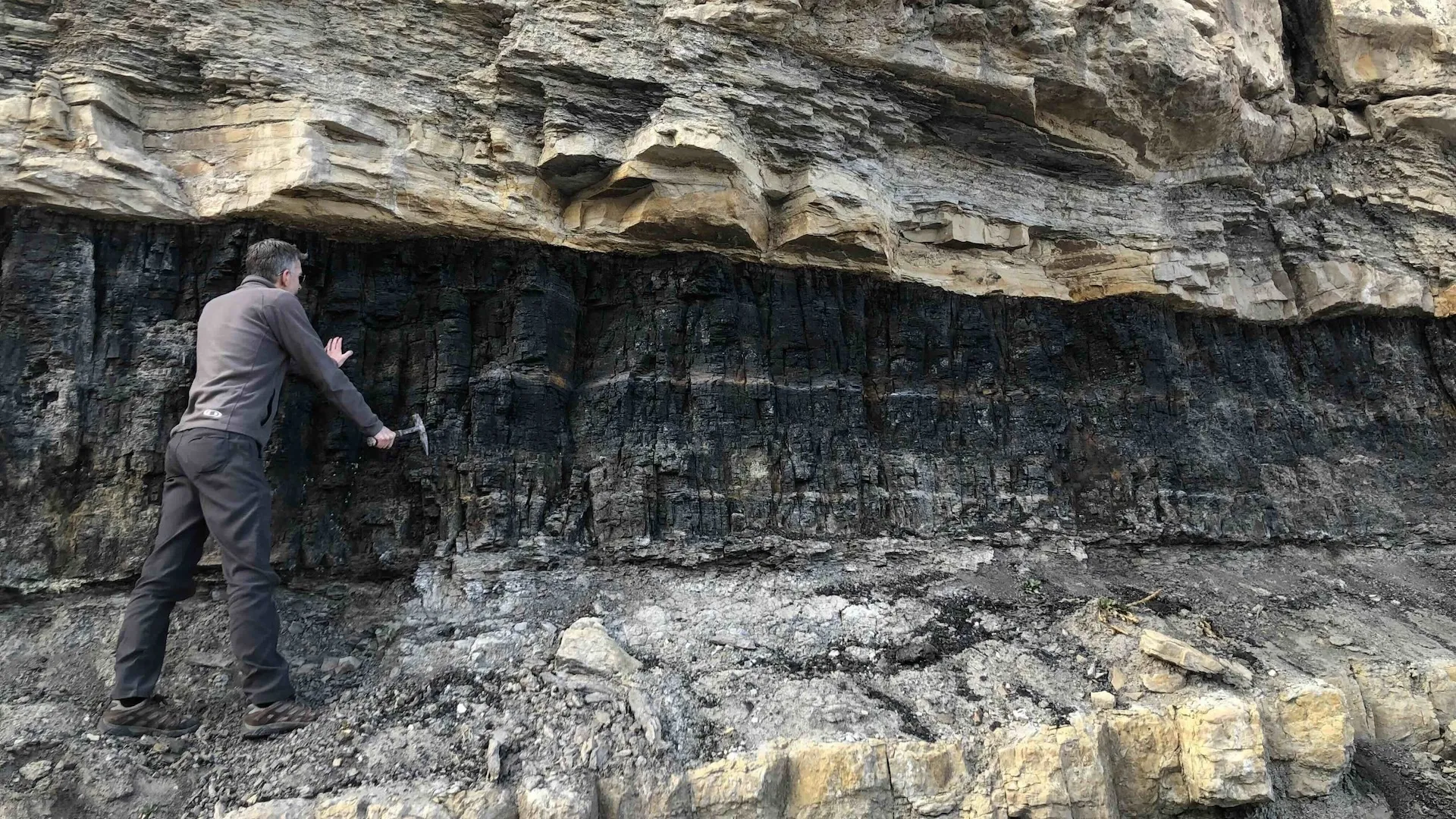
Valuable rare earth elements that are crucial for batteries, touchscreens and other modern technologies may be snuggled right up against fossil fuels, researchers have discovered.
A new study of coal mines in Utah and western Colorado found that rock layers alongside coal seams are rich in elements like scandium, yttrium and neodymium. These and other rare-earth elements are used in ubiquitous modern technologies like smartphones and are also crucial for green energy technologies such as wind turbines and hybrid cars.
The vast majority of rare earth elements are currently mined or processed in China, and so the U.S. Department of Energy has been funding the hunt for these elements in the United States, in hopes of spurring domestic production.
"There’s a real societal need to develop these minerals domestically," study co-author Lauren Birgenheier, a geologist at the University of Utah, told Live Science.
Inspired by previous research that had found rare earth elements in association with coal in the Appalachian region, Birgenheier and her team took samples from six active and four idle coal mines in central Utah and western Colorado. The researchers used X-ray fluorescence and mass spectrometry — two geochemical methods for determining which elements exist within a sample — to look for traces of the 17 metallic rare earths elements.
The researchers found that between 24% and 45% of shale and siltstone rocks adjacent to coal seams had at least 200 parts per million (ppm) of these elements, while 100% of volcanic rocks sampled contained rare earth elements at those levels or higher.
Get the world’s most fascinating discoveries delivered straight to your inbox.
"They're in these shale or muddy gray units that are above and below the coals," Birgenheier said. "If you’re already mining the coal seam out you could envision a model where you take some of the shales above and below."
RELATED STORIES
The Department of Energy currently considers a concentration of 300 ppm of rare earth elements as economically viable for mining. Birgenheier and her team set the lower bar of 200 ppm for exploratory reasons, and more work will be needed to find out how many of the deposits are feasible for mining.
In western Colorado and Utah, the coal beds formed from a peat swamp environment, Birgenheier said, and the rare earth elements probably became integrated into the rock layers from volcanic ash that settled in the swamps, or from biological organisms that accumulated the metals before dying and transforming, under heat and pressure, into coal. Over millennia, the metals may then have leached out of the coal itself and into the adjoining rocks. Coal beds across the country have different histories, she said, but other research groups are currently carrying out similar studies in moreother areas, from the Gulf Coast to Wyoming to the coal fields of Illinois.
The findings were published April 26 in the journal Frontiers in Earth Science.

Stephanie Pappas is a contributing writer for Live Science, covering topics ranging from geoscience to archaeology to the human brain and behavior. She was previously a senior writer for Live Science but is now a freelancer based in Denver, Colorado, and regularly contributes to Scientific American and The Monitor, the monthly magazine of the American Psychological Association. Stephanie received a bachelor's degree in psychology from the University of South Carolina and a graduate certificate in science communication from the University of California, Santa Cruz.