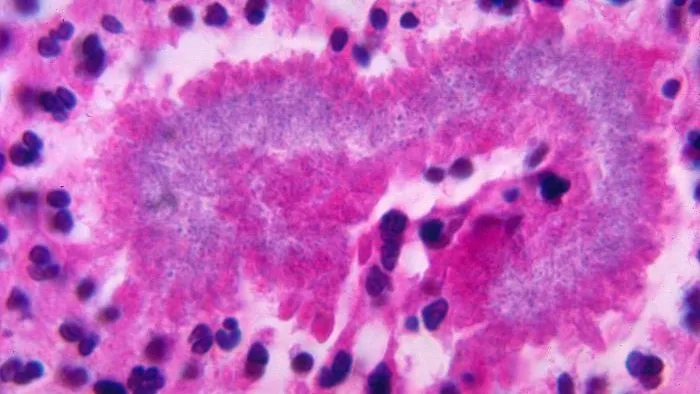
Affected populations: Nocardiosis is a rare but potentially deadly infectious disease caused by bacteria in the genus Nocardia. Nocardiosis is an opportunistic infection, meaning it doesn't typically affect healthy people but may seize the chance to infect people with weakened immune systems, such as people with cancer or HIV/AIDS, as well as organ transplant recipients who are taking immunosuppressive drugs.
However, around 20% to 30% of patients with nocardiosis have no known pre-existing conditions, so the infection doesn't exclusively affect people with immune deficits. People over the age of 40, especially men, are also more likely to develop the disease than other demographics.
Between 500 and 1,000 new cases of nocardiosis are reported in the United States every year.
Causes: Nocardia bacteria are found in soil, standing water and decaying plant material. Around 100 Nocardia species have been identified so far, of which 12 are known to infect humans.
People may become infected with Nocardia bacteria when they inhale dust containing the microbes or they have a cut or scrape that comes in contact with contaminated soil or water.
Sign up for the Live Science daily newsletter now
Get the world’s most fascinating discoveries delivered straight to your inbox.
Nocardiosis is not known to spread from one person to another; people pick it up directly from the environment.
Symptoms: The symptoms of nocardiosis vary depending on which part of the body is infected by Nocardia bacteria.
Most cases of nocardiosis start out as lung infections, in which pus-filled cavities, or abscesses containing the bacteria, form in the lungs. This can cause symptoms such as chest pain, a cough (including coughing up blood), sweats, chills and general weakness.
Image 1 of 2
(Image credit: Future)
(Image credit: CDC/ Dr. Libero Ajello via CDC PHIL)
Skin ulcers on the arm of a patient infected with nocardiosis.
Nocardia bacteria can then travel in the bloodstream and form abscesses in other regions of the body, including the brain, kidneys and intestines. Infections of the brain can cause headache, weakness, confusion and seizures.
Approximately one-third of all patients infected with nocardiosis develop skin ulcers or sores, instead of an internal infection. These skin lesions typically form across the hands, chest wall or buttocks. They may look like open wounds or bumps under the skin.
Without treatment, nocardiosis can rapidly lead to death, often by causing organ failure or sepsis, a dangerous body-wide immune reaction. Between 16% and 40% of patients with nocardiosis die as a result of their infection. If the disease spreads to the brain, death rates jump to more than 80%.
Treatments: Nocardiosis can be treated with common antibiotics, although these bacteria are normally resistant to penicillin. The antibiotic treatment usually takes between six and 12 months to complete, and some patients may need to take antibiotics for even longer to prevent the disease from coming back.
Emily is a health news writer based in London, United Kingdom. She holds a bachelor's degree in biology from Durham University and a master's degree in clinical and therapeutic neuroscience from Oxford University. She has worked in science communication, medical writing and as a local news reporter while undertaking NCTJ journalism training with News Associates. In 2018, she was named one of MHP Communications' 30 journalists to watch under 30.
You must confirm your public display name before commenting
Please logout and then login again, you will then be prompted to enter your display name.