













Scuba diver discovers 30,000 astonishingly well-preserved Roman coins off Italian coast
The well-preserved bronze coins found off the coast of Sardinia could be linked to a shipwreck.
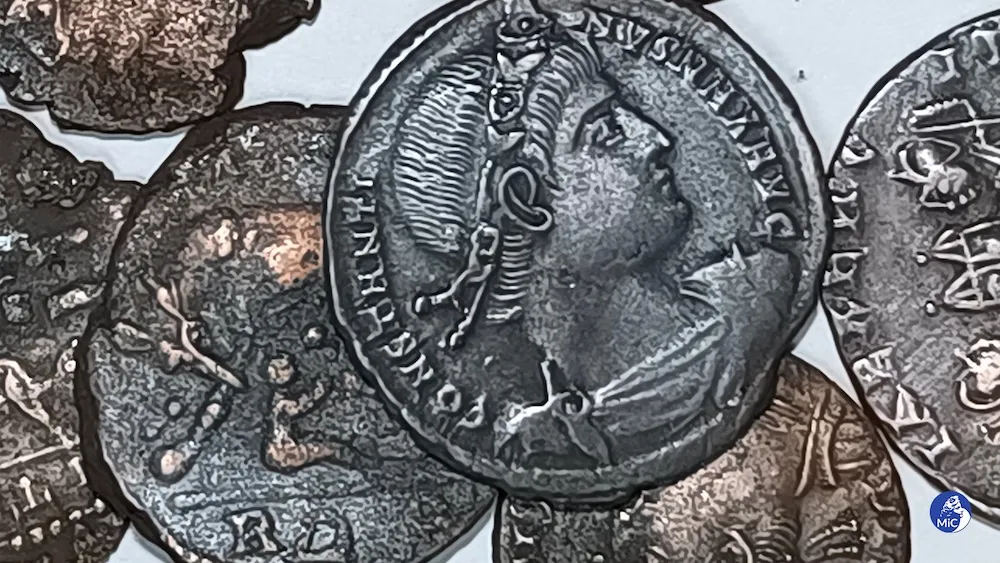
A diver exploring the waters off Sardinia in Italy has discovered tens of thousands of Roman-era bronze coins hidden in the seagrass.
The man immediately contacted the authorities about the finding, which was near the town of Arzachena. Based on the location of the hoard, experts think the cache could be connected to an undiscovered shipwreck, according to a translated statement by Italy's Ministry of Culture.
Initial weight estimates put the hoard at between 30,000 and 50,000 pieces. Only four were damaged, but even these contained legible inscriptions, including dates and faces.
Related: 2,000-year-old hoard of Roman coins may have been hidden by a soldier during a bloody civil war in Italy
Further examination by archaeologists revealed that the folles, a type of large coin used in the Roman and Byzantine empires, were minted sometime between A.D. 324 and 340 and were in an "exceptional and rare state of preservation," according to the statement.
The coins were in circulation during Roman Emperor Constantine the Great's reign, which lasted from A.D. 306 to 337.
RELATED STORIES
"The treasure found in the waters of Arzachena represents one of the most important discoveries of numismatic finds in recent years and highlights once again the richness and importance of the archaeological heritage [at] the depths of our seas," Luigi La Rocca, general director of archaeology, fine arts and landscape for the Mediterranean island, said in the statement.
Get the world’s most fascinating discoveries delivered straight to your inbox.
Jennifer Nalewicki is former Live Science staff writer and Salt Lake City-based journalist whose work has been featured in The New York Times, Smithsonian Magazine, Scientific American, Popular Mechanics and more. She covers several science topics from planet Earth to paleontology and archaeology to health and culture. Prior to freelancing, Jennifer held an Editor role at Time Inc. Jennifer has a bachelor's degree in Journalism from The University of Texas at Austin.