 Live Science Plus





Viking jewelry
Shamanic importance

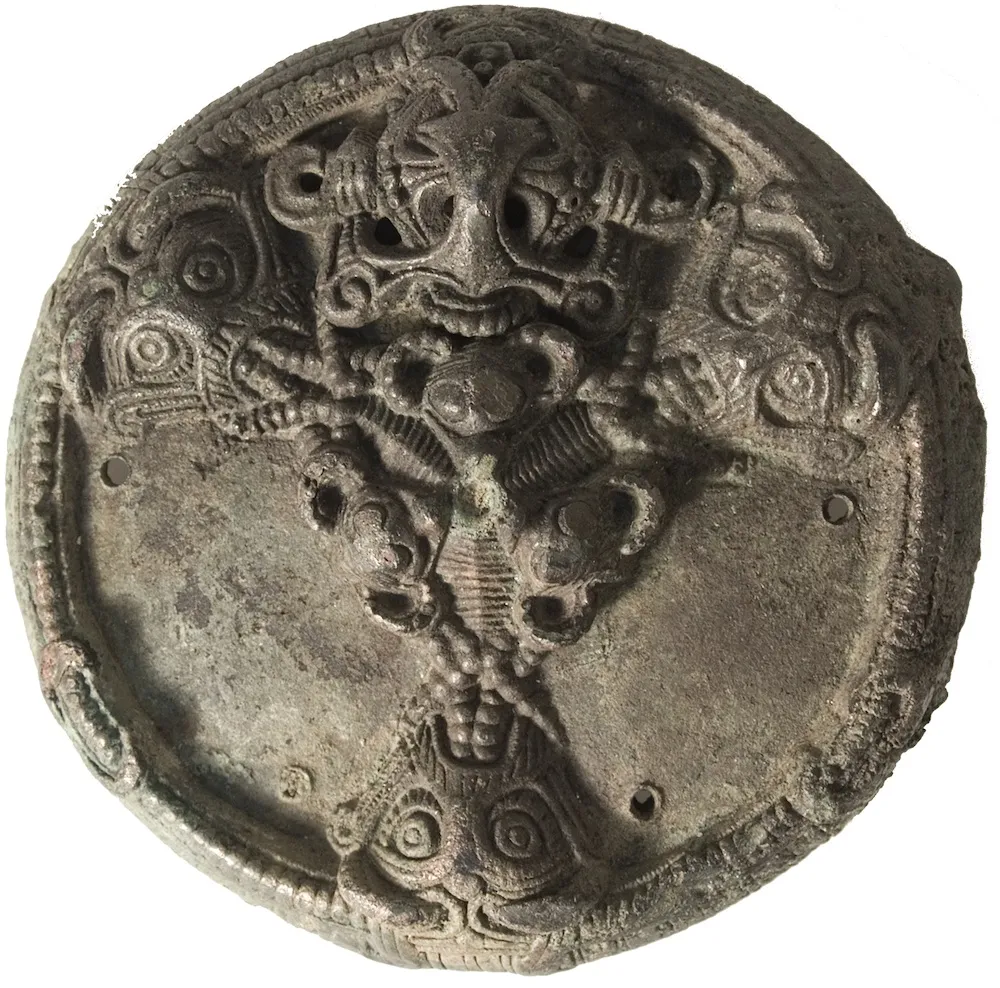
An up-close view of the face of the surviving animal figure. It appears to be an anthropomorphic image something common in Viking art. Originally the object would have had three figures like this. Such images may be of shamanic importance, helping to mediate between this world and another.
Ancient brooch

This brooch appears to be from continental Europe and contains gold textured in a waffle shape, along with a cross that was made of red glass and semiprecious stone. The artifact was made between A.D. 500-750, apparently predating the Viking age farm site. It's possible that it was acquired by a non-Christian at the site through exchange. It may have been worn by a high-ranking woman, perhaps on a dress.
Article continues belowAn oval brooch

The upper part of an oval double shelled brooch, just over two inches (5 centimeters) in size. Partly gilded with gold it contains dozens of tiny incisions along with raised areas and swirling decorations. It dates to between AD 850-950.
Beautiful detail

A fragment of a small brooch decorated in gilded relief. It dates to around the 8th century AD.
A trefoil

A fragment of a "trefoil" (three lobed) brooch decorated in relief, it dates to between AD 850–950. Its design shows influence from a European culture known as Carolingian.
Perfect preservation

Another trefoil brooch, this one with all three of its lobes preserved. Carved with geometric motifs it is believed to date to the late 8th or early 9th century AD.
Heart-shaped decor

Researcher Ole Thirup Kastholm notes that this copper alloy brooch, gilded with gold, is "decorated with three sets of double-horned, heart shaped spirals in low relief."

