













Wise Researchers Close in on Definition of Wisdom

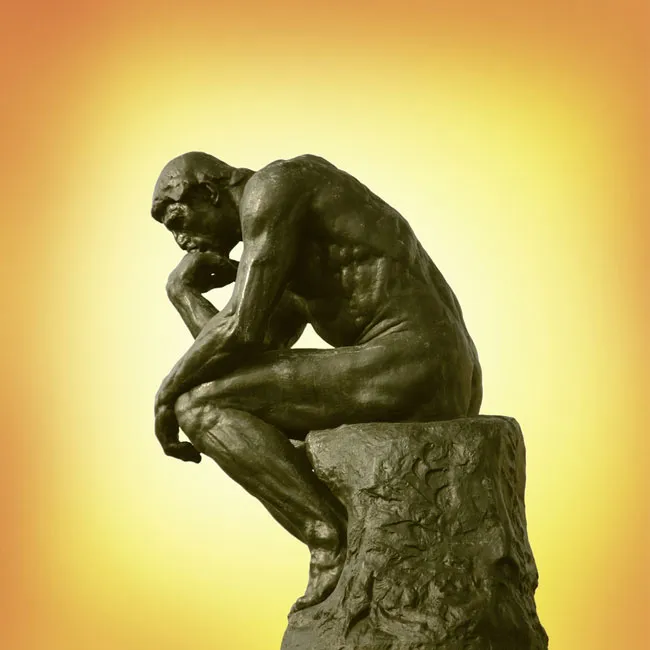
You may know wisdom when you see it, but scientists have yet to come of with a concise definition.
A new survey of 30 people who study wisdom reveals wisdom has features that distinguish it from other similar traits, such as intelligence and spirituality.
"There are several major definitions of wisdom, but no single definition that is all-inclusive and embraces every important aspect of wisdom," said study researcher Dilip V. Jeste, professor of psychiatry and neuroscience at the University of California, San Diego.
"Intelligence and spirituality share features with wisdom, but they are not the same thing," Jeste explained. "One can be intelligent, yet lack practical knowledge. Spirituality is often associated with age, like wisdom, but most researchers tend to define wisdom in secular terms, not spiritual."
Most of the experts agreed wisdom could be characterized as follows:
- Wisdom is uniquely human.
- Wisdom is a form of advanced cognitive and emotional development that is experience-driven.
- Wisdom is a personal quality, albeit rare.
- Wisdom can be learned, increases with age and can be measured.
- Wisdom is probably not enhanced by taking medication.
Participating experts rated the relevance and importance of six statements on a scale from 1 (definitely not) to 9 (definitely so) with regards to the concepts of wisdom, intelligence and spirituality; for example "the concept can be applied to human beings."
The experts were then asked to rate the importance of 47 components, such as altruism, practical life skills, sense of humor, realism, willingness to forgive others and self-esteem, to the concepts of wisdom, intelligence and spirituality.
Get the world’s most fascinating discoveries delivered straight to your inbox.
"One survey, of course, cannot fully and completely define wisdom," Jeste said. "The value here is that there was considerable agreement among experts that wisdom is indeed a distinct entity with a number of characteristic qualities. The data from our research should help in designing future empirical studies on wisdom."
The results are published online in the June issue of the journal Gerontologist.
- Top 10 Ways to Keep Your Mind Sharp
- 10 Things You Didn't Know About the Brain
- World Trivia: Challenge Your Brain
