













Fetal Memories? Not So Fast

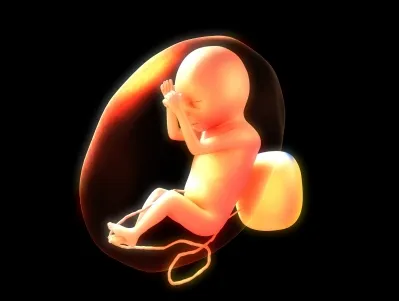
A new Dutch study that examined how 95 fetuses responded to in-utero vibrations has concluded that "the unborn may have memories by the 30th week of pregnancy" — or at least that's how the story is being widely reported.
For example, in an ABC News story on the study, a young woman named Angela Morton discusses her mother's technique for soothing her as a child: Playing the song "Angel" by Aerosmith. "She used to go play it when she pregnant and sing along and then when I was fussy as a baby she used to play it and I calmed down." Morton, who is herself pregnant, said she plays Christian rock for her unborn son Christian, and plans to expand her music collection in light of this research.
But before Morton rushes to buy more music so that little Christian will pop out toe-tapping to Stryper, a few words of caution are in order.
First, people should understand that the researchers are using the term "memory" very differently than most people do. When we think of memories, it may conjure up images of a first kiss, a concert we saw last weekend, or that trip to Lake Tahoe. That's not what the study looked at; instead it examined habituated responses to vibrations. This is a phenomenon that has been long known to exist in fetuses (and even in individual, non-conscious cells). The response found in the study is interesting. But calling it "memory" is a gross exaggeration, an inaccurate journalistic shorthand that makes intriguing headlines but bears no resemblance to anything most people know as memory.
Furthermore, being habituated to a generalized, short-term low-level vibration is not the same as remembering a rock ballad from the good old days inside the womb. While it is possible that Aerosmith's 1988 hit had some special soothing significance for Morton, there were likely dozens or hundreds of other sounds and vibration patterns that she was repeatedly subjected to as a fetus, from a car's engine to an air conditioner hum, that might have soothed her as a baby.
Some adults even claim to have memories from pre-birth, though there is no evidence for this at all. Karl Sabbagh, author of "Remembering Our Childhood: How Memory Betrays Us," explored the scientific evidence for the veracity of early childhood memories. He concludes that "narrative memories from early on—little stories about who did what to whom—are unlikely to be pure unmediated memory." That is, if a person claims to remember specific events from very early in life (even pre-birth), the story is almost certainly a creation of imagination and fantasy, not an actual memory.
So while the "fetuses have memory" headline is kind of technically true in the broadest possible scientific sense, it's quite a logical leap to listen to music for your baby's benefit.
Get the world’s most fascinating discoveries delivered straight to your inbox.
Editor's Note: LiveScience also reported on this study, here.
Benjamin Radford is managing editor of the Skeptical Inquirer science magazine. His books, films, and other projects can be found on his website. His Bad Science column appears regularly on LiveScience.
